
oviparity
- noun
- /ˌoʊvɪˈpærɪti/
- Specialized
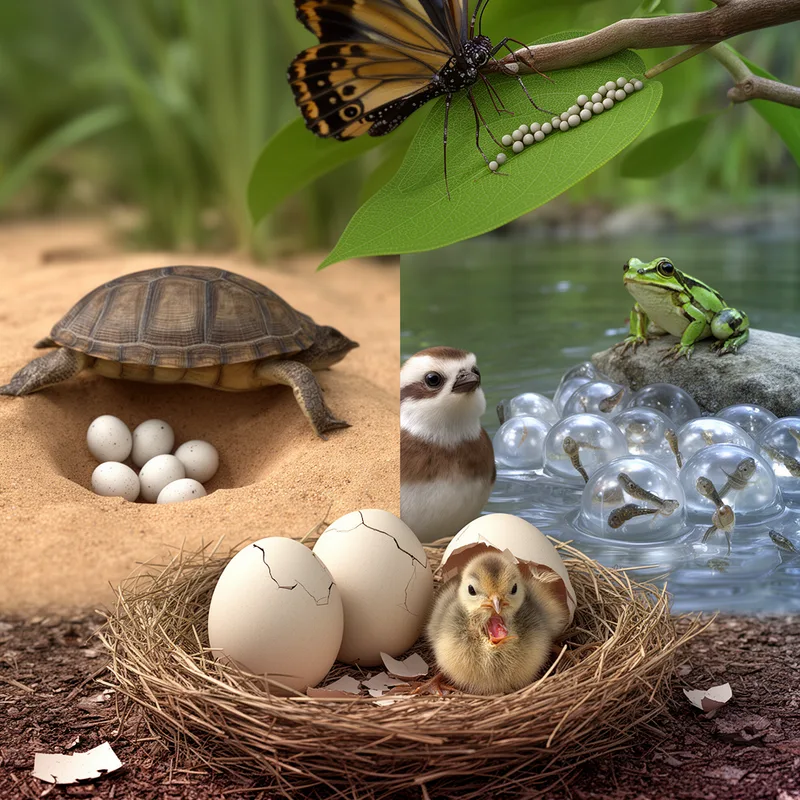
- Birds are a prime example of oviparity, as they lay eggs that develop and hatch outside the mother's body.
Examples
-
Lizard species exhibiting oviparity lay eggs requiring a period of embryonic development in a nest—usually a day or more.
Academic text (1993) -
Historically, three terms have been used to describe vertebrate reproductive modes: oviparity, ovoviviparity, and viviparity.
Academic text (1993) -
Eggs retained in utero until late in development are included in oviparity.
Academic text (1993) -
The process of oviparity is evident in species like frogs, where they lay eggs that will later hatch into tadpoles.
-
Some reptiles exhibit oviparity, laying eggs in nests that provide protection from predators.
Synonyms

 1
8.5
1
8.5

To lay eggs, especially by insects or fish
Antonyms

How Live-Bearing

Surface Forms
Morphology
oviparity = oviparous (semi-transparent) = ovi + par + ity
Formation from the adjective 'oviparous' to the noun 'oviparity' by the productive suffix '-ity' is regular and straightforward.
Etymology
Oviparity comes from the Latin parts ovi- meaning 'egg' and -parity meaning 'to bring forth', a root related to parent. So, oviparity is the way animals lay or 'bring forth' eggs that develop and hatch outside the mother's body.