
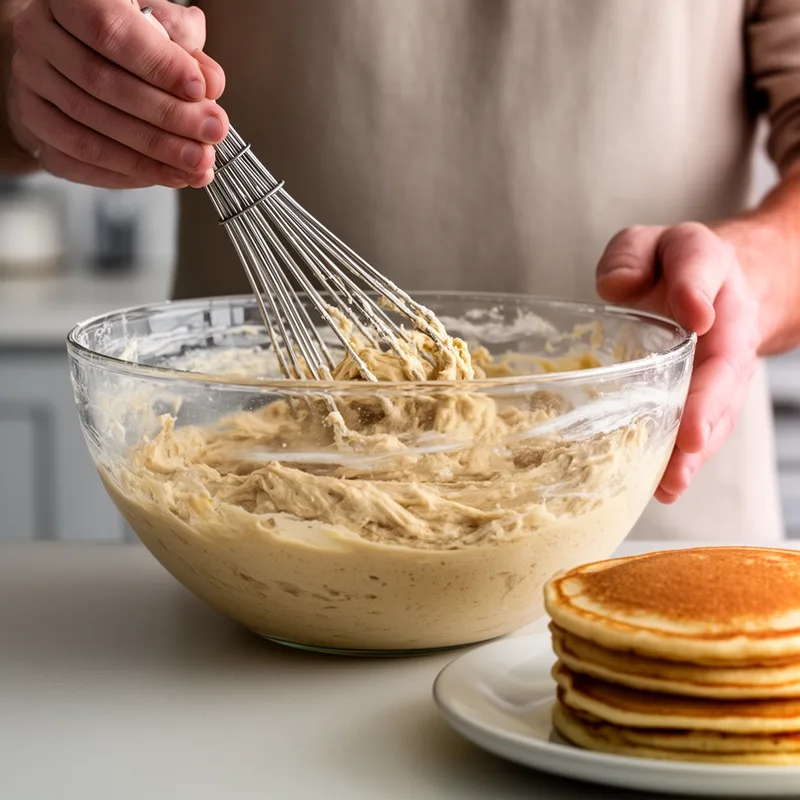
to overstir
7.7
To stir a mixture too much so it becomes tough or dense
- verb
- /ˌoʊvərˈstɜr/
:
mezclar en exceso
- The recipe warns that overstirring can make the cake dense instead of light and fluffy.
Examples
-
Be careful not to overstir the soup, or it could lose its texture.
-
If you overstir the pancake batter, the pancakes may become tough and chewy.
-
Don't overstir the batter!
-
She always overstirs the dough.
-
Be careful not to overstir the batter, or it will become tough.
-
If you overstir the sauce, it may lose its smooth consistency.
-
When making whipped cream, avoid overstirring, as it can turn into butter.
Synonyms
to overmix
vsto overstir
 1
3.9
1
3.9

Stir ingredients too much so the food becomes tough or heavy
refers to same harm from gentle circular hand motions
to overbeat
vsto overstir

 1
5.2
1
5.2
To beat a food mixture too much so it becomes dense or turns to butter
occurs with gentle circular hand motions rather than strong whipping
How Stirred

Surface Forms
overstir infinitive
overstirred past
overstirred past participle
overstirring present participle
overstirs third person singular
Morphology
Etymology
Overstir comes from over- meaning 'too much' and stir meaning 'mix'. Think of stirring batter until it becomes heavy and tough, and you will see why to overstir means to mix something too much and spoil its texture.