

to overgrow
 2
4.4
2
4.4

- verb
- /ˌoʊvərˈɡroʊ/
 :
cubrir
:
cubrir
- The island was abandoned, and the luxurious wild growth threatened to overgrow even the roads.
- overgrow the coral
And because of this, it starts to overgrow and of course cause trouble to our digestive tract.
- And because of this, it starts to overgrow and of course cause trouble to our digestive tract.
Examples
-
The cattail in the PPR is an invasive species that can completely overgrow wetlands.
Academic text (2011) -
In areas where there are few herbivores, seaweeds overgrow corals, slowing their growth or even smothering them.
Academic text (1998) -
The coral can later overgrow the area of dead skeletons.
Academic text (2008) -
And because of this, it starts to overgrow and of course cause trouble to our digestive tract.
-
However, the fungus itself will survive and overgrow, which can lead, of course, to persistent infection.
Academic text (2004) -
Across the river, in the new part of Blaszka, you could see the ruins of the mill and the woods overgrowing abandoned houses.
Fiction book (1999) -
The coral protects the crab from predators, and the crab eats seaweeds that would otherwise overgrow the coral.
Academic text (1998) -
Now kudzu is considered a noxious weed in certain states, having overgrown many a roadside landscape.
Academic text (1996) -
She shook her head, poked her way through thicker brush that had overgrown the hidden trail.
Fiction book (2001) -
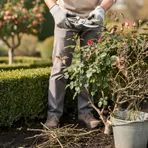
The garden became a jungle as the weeds began to overgrow everything in sight.
Synonyms
 4
3.5
4
3.5
To spread over something and cover it, as moss or vines do
 1
7.1
1
7.1
Move across a surface and cover it, like mist or color
Antonyms
How Overgrown
20
4.2
 38
4.8
2
4.4
∞
1.0
664
1.6
∞
1.0
68
2.0
38
4.8
2
4.4
∞
1.0
664
1.6
∞
1.0
68
2.0
Surface Forms
Morphology
Etymology
The word overgrow is built from over- ('above' or 'too much') and grow ('to get bigger'). Imagine plants growing 'over' a fence or a pot and covering it, which is why overgrow means to grow too much or to cover something.