

os zygomaticum
- noun
- /ˈɑs zaɪɡəˌmætɪkəm/
- Specialized
- The os zygomaticum is often referred to as the cheekbone in everyday language.
Examples
-
The surgeon repaired the fractured os zygomaticum after the accident.
-
Injuries to the os zygomaticum can affect the shape of the face.
-
The os zygomaticum is crucial for facial structure.
-
Can you identify the os zygomaticum on the skull?
-
The surgeon repaired the fractured os zygomaticum after the accident.
-
Injuries to the os zygomaticum can affect the shape of the face.
-
The os zygomaticum is often referred to as the cheekbone in everyday language.
Synonyms

 48
2.5
48
2.5

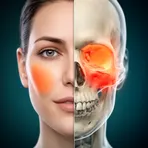
A bone below the eye that makes the side of the face stand out
 1
8.0
1
8.0
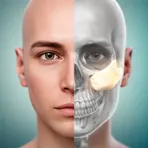
A bone that forms the cheek and part of the eye socket

 1
7.6
1
7.6
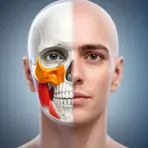
A bone that forms the cheek below the eye
 1
9.8
1
9.8
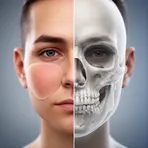
A bone that forms the cheek below and beside the eye
 1
9.9
1
9.9
A bone under the eye that makes the cheek stand out
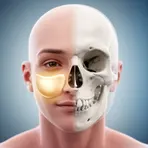
A bone under the eye that makes the cheek stick out
Surface Forms
Morphology
os + zygomaticum
The compound is fully compositional: 'os' means bone and 'zygomaticum' denotes the zygoma/cheek region, so the phrase literally denotes the zygomatic (cheek) bone. Although the form is Latinized and technical, the meaning follows directly from the constituents and is cross-linguistically comparable in anatomical terminology, so a learner who knows both parts can infer 'cheekbone'.
Etymology
Os zygomaticum comes from old Latin and Greek words. The Latin os means 'bone' and zygomaticum comes from a word for a 'yoke', a bar that joins two parts, so it pictures the bone that links the cheek to the skull and therefore means the 'cheekbone' today.