

jugal bone
- noun
- /ˈdʒuːɡəl boʊn/
- Specialized
- Many animals have prominent jugal bones that define their facial features.
Examples
-
Damage to the jugal bone can affect the shape of the face.
-
Paleontologists identified the dinosaur from the distinctive jugal bone.
-
The jugal bone is prominent in many reptile skulls.
-
The jugal bone supports the structure of the face.
-
Damage to the jugal bone can affect the shape of the face.
-
Paleontologists identified the dinosaur from the distinctive jugal bone.
-
The jugal bone is prominent in many reptile skulls.
Synonyms

 48
2.5
48
2.5

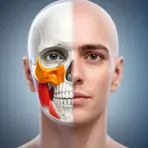
A bone below the eye that makes the side of the face stand out
 1
8.0
1
8.0
A bone that forms the cheek and part of the eye socket


 1
9.9
1
9.9
A bone under the eye that makes the cheek stand out
 1
7.6
1
7.6
A bone that forms the cheek below the eye
 1
9.8
1
9.8
A bone that forms the cheek below and beside the eye

A bone under the eye that forms the cheek
Surface Forms
Morphology
jugal + bone
The phrase is a simple adjective + noun composition: if a learner knows 'jugal' (relating to the cheek) and 'bone', they can infer it denotes the bone in the cheek/zygomatic area. 'Jugal' is specialized vocabulary and may be unfamiliar to B1 learners, but the meaning is fully compositional and follows regular anatomical naming patterns.
Etymology
Jugal bone may come from an old Latin word meaning 'yoke', a thing that joins two parts. The jugal bone makes a curved bridge under the eye that joins parts of the skull, so the name came to mean the 'cheek' bone that shapes the face.