

organic evolution


 1
4.7
1
4.7
- noun
- /ɔrˈɡænɪk ˌiːvəˈluːʃən/
- Specialized
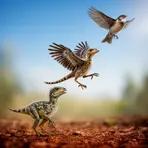
- The fossil record provides evidence of organic evolution, showcasing how species have changed over time.
Loading YouTube…
Watch on YouTubeBut digital evolution is billions of times faster than organic evolution.
- But digital evolution is billions of times faster than organic evolution.
Examples
-
All life has made the same journey of organic evolution.
Academic text (1994) -
" It is naturally in the domain of social and organic evolution that the imagination finds its greatest scope."
Blog text (28) -
The SSE is the world's largest organization of evolutionary science, comprising 2,900 members in 50 countries who seek to promote "the study of organic evolution and the integration of the various fields of science concerned with evolution" (http: **41;3090;TOOLONG).
Academic text (2006) -
Darwin's theory of natural selection explains the mechanisms of organic evolution over millions of years.
-
Understanding organic evolution helps explain the diversity of life we see on Earth today.
Synonyms
 377
4.4
377
4.4
Gradual change in living things over many generations caused by nature
 4
4.4
4
4.4
A slow process of change and development by small steps over time
 1
9.3
1
9.3
Large changes in living things over millions of years that make new groups such as mammals
 1
6.4
1
6.4
A gradual change that makes something more advanced or complex

A slow change where one kind of living thing becomes another over a long time
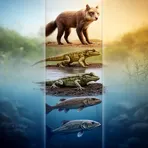
Slow change of a living thing into a different kind over a long time

The way a group of living things changes over a long time to form new species
Antonyms
Surface Forms
Morphology
The meaning 'the evolution of living organisms' follows directly from combining 'organic' (relating to living things) with 'evolution' (gradual change over time). While 'organic' has other senses (e.g., natural, chemical), in this collocation the biological sense is predictable and cross-linguistically parallel, so a B1 learner who knows both words should understand it.
Etymology
Organic evolution links organic (meaning 'living') and evolution ('change over time'). Early scientists used the picture of small changes in plants and animals adding up over many years, so today the phrase means the slow development of new species.