
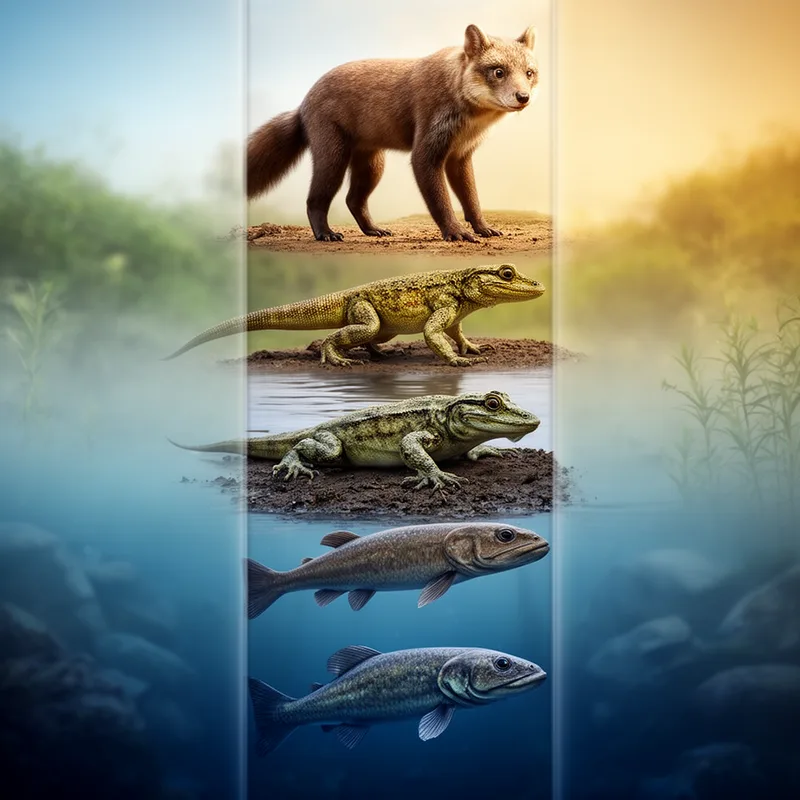
anamorphism
- noun
- Specialized
- Biologists study anamorphism to understand how complex organisms developed from simpler ancestors.
Examples
-
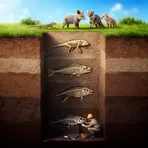
The fossil record provides evidence for anamorphism throughout the history of life on Earth.
-
Darwin's theory of evolution includes the concept of anamorphism as species adapt to their environments over time.
-
The concept of anamorphism is fascinating in evolutionary biology.
-
Can you explain anamorphism in simple terms?
-
Biologists study anamorphism to understand the gradual changes that transform one type of organism into another over time.
-
Darwin's theory of evolution highlights anamorphism, showing how species evolve through minor adaptations to their environment.
-
The fossil record offers crucial insights into anamorphism, illustrating how life forms have slowly evolved from simpler ancestors.
Synonyms

 377
4.4
377
4.4

Gradual change in living things over many generations caused by nature
 4
8.3
4
8.3
A process by which new species form from existing ones
 4
4.4
4
4.4
A slow process of change and development by small steps over time
 1
9.3
1
9.3
Large changes in living things over millions of years that make new groups such as mammals

 1
4.7
1
4.7
Living things change slowly over many years to form new species
 1
6.4
1
6.4
A gradual change that makes something more advanced or complex

A slow change where one kind of living thing becomes another over a long time

Change in a species over time without splitting into new species

The way a group of living things changes over a long time to form new species
How Evolved

- Specialized
377
4.4
- Specialized
77
3.3
363
3.1
Surface Forms
Morphology
Etymology
The word anamorphism combines ana- 'up' or 'again' and morph 'form', like the common word metamorphosis, so think of a slow 'changing of form' over time. That is why anamorphism can mean the gradual evolution of one organism into another.