
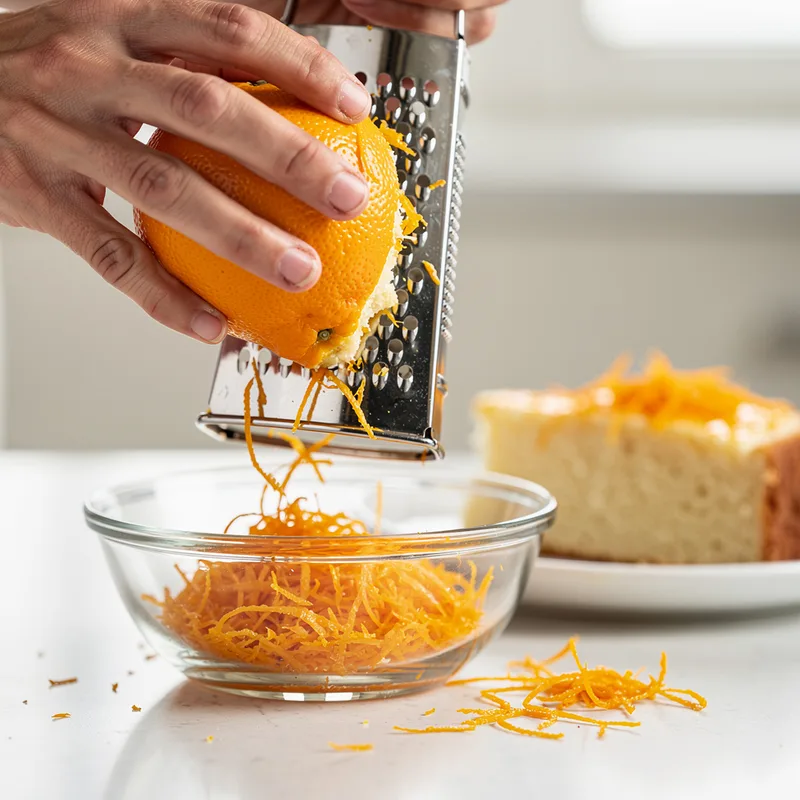
orange zest
 4
2.8
4
2.8

- noun
- /ˈɔrɪndʒ zɛst/
- Put the butter, sugar, vanilla, and lemon and orange zest in a stand mixer fitted with the beater attachment and beat to combine but not aerate much, about 1 minute.
- teaspoon of orange zest
- tablespoon of orange zest
- grated orange zest
Examples
-
You can also add lemon peels, orange zest, ginger shavings, or even mango skins for a little extra flavor.
Blog text (19) -
The recipe calls for a tablespoon of orange zest to enhance the citrus flavor of the dish.
-
Orange zest can be stored dried in a glass jar for about a week if kept in a cool place.
Blog text (32) -
I added some orange zest and successfully substituted brown sugar for the molasses.
Blog text (5) -
The recipe I made also calls for rolling the doughnuts in orange zest-infused sugar. O. M. yum.
Blog text (22) -
I put it in a sundae with orange zest, orange slices, and a few scoops of vanilla Snoqualmie Ice Cream.
Blog text (21) -
And to benefit from the antioxidant hesperidin, use the orange zest in baking and cooking, as with my Grilled Herbed Salmon recipe (above).
Blog text (32) -
Take the solid matter and chop it a bit (cranberry skin has an amazing amount of fiber), throw in some chopped pecans, and use the mix as a smear in sweet rolls (I put orange zest in the dough).
Blog text (4) -
Homemade cranberry sauce made with a bit of sugar—just enough to take away some of the bitterness, but not all of it!—and lemon or orange zest.
Blog text (18) -
For a burst of flavor, add orange zest to your cake batter before baking.
Synonyms
 5
1.4
5
1.4
The outer skin of an orange that adds flavor or becomes candy
 1
2.1
1
2.1
The outer skin of an orange used to add flavor or decoration
How Strong


Surface Forms
Morphology
The meaning is directly and transparently derived from 'orange' (the fruit) and 'zest' (the colored outer peel or the action of removing it); a learner who knows these constituents will infer that 'orange zest' refers to the grated or shaved outer skin used for flavoring. This is a literal, compositional noun phrase found across languages, so its sense is immediately accessible to a B1 learner.
Etymology
Orange zest is the thin, bright outer skin of an orange called the zest, which cooks grate or shave to release the fruit's strong oil and smell. Because those thin shavings hold most of the orange's taste and smell, they are used as a 'flavoring' to add a fresh, bright taste to food.