
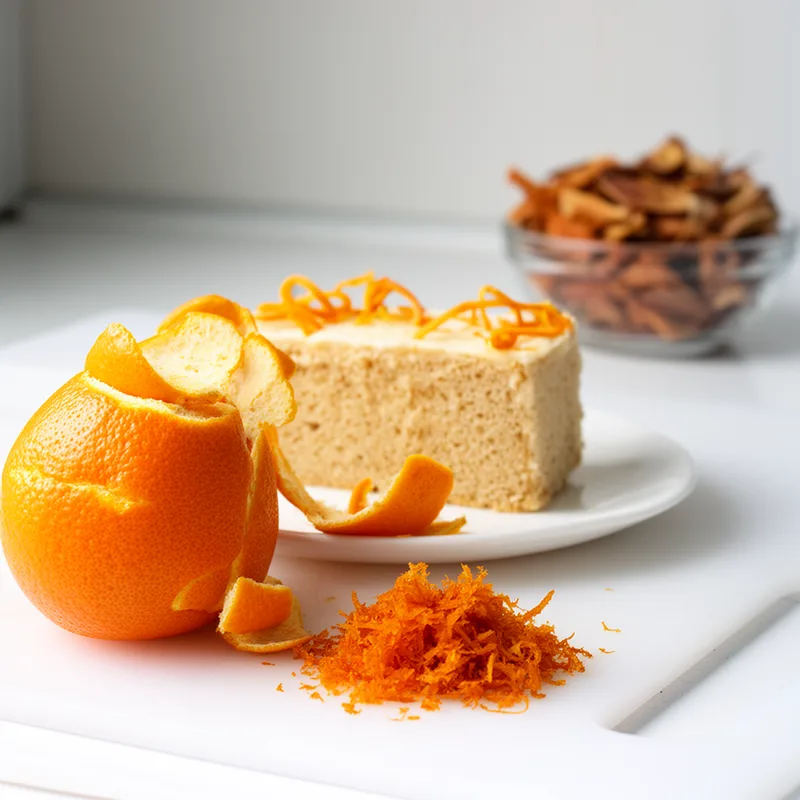
orange rind
 1
2.1
1
2.1

- noun
- /ˈɔrɪnd/
- It's like gin and champagne with like a hint of lime juice a little a little sprig, a orange rind up there at the top.
- grated orange rind
- grated orange rind
- teaspoon grated orange rind
Examples
-
A thickened orange rind.
Fiction book (2000) -
You don't put orange rind on the edge of your plate, it goes there, you dolt!
-
Then reduce the heat to a simmer and toss in orange rind.
Blog text (28) -
The juice of one orange and 1 tsp of orange rind.
Blog text (28) -
I tried to do some like curly orange rind and I dried it overnight.
-
I took out my pocket knife and carefully carved a six-petaled flower out of the orange rind, so the orange was surrounded by its flower.
Fiction book (1994) -
Mote chewed a couple of slivers of orange rind.
Fiction book (1997) -
If serving duck to the king, a host might want to shred orange rind over the bird's skin, then pour a jigger or two of brandy on the platter and set it aflame.
Fiction book (1998) -
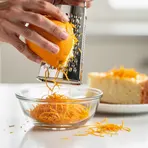
Aunt Melba began grating the orange rind, and the clean, friendly smell filled her airy kitchen.
-
For some extra zest, grate orange rind into the batter.
Synonyms
 72
1.0
72
1.0
The outer skin of a fruit or vegetable that you usually remove before eating
 5
1.4
5
1.4
The outer skin of an orange that adds flavor or becomes candy
 4
2.8
4
2.8
Thin outer skin of an orange grated to add flavor to food


 1
9.9
1
9.9
The outer skin of a fruit or the bark of a tree
How Flavorful

Surface Forms
Morphology
The meaning is directly and literally composed from 'orange' (the fruit) + 'rind' (the tough outer covering), so the phrase denotes the fruit's outer skin/peel. This is a straightforward, compositional combination found across languages, so a B1 learner who knows both words will readily understand it.
Etymology
Orange rind comes from the thin outer skin of an orange, which people call the rind. People grate or peel the rind to add a strong 'flavor' or to decorate food, so the phrase now means the orange's skin used for cooking.