

on the offensive
 19
6.6
19
6.6

- idiom
- Now, we go on the offensive.
- go on the offensive
- on the offensive against terrorists
Loading YouTube…
Watch on YouTubeI mean, I think Democrats need to get on the offensive like you did in the podcast.
- I mean, I think Democrats need to get on the offensive like you did in the podcast.
- Whoever it goes on the offensive will lose massive numbers of people and history will not look kindly upon them.
Examples
-
Diana decided to go on the offensive.
Fiction book (1992) -
If we are going to have to use force anyway, let it be on the offensive.
Blog text (25) -
We need to go on the offensive, okay?
-
And we will take it by going on the offensive.
-
China is on the offensive.
-
For the first time tonight, ladies and gentlemen, he is on the offensive.
-
Faced with another stalemate, the bank's officials went on the offensive.
Academic text (1998) -
The cartel has made the decision to go on the offensive and expand their operation into neighboring countries.
-
That's why people who understand climate science need to go on the offensive and call the climate contrarians to account.
Academic text (2010) -
Our country must also remain on the offensive against terrorism here at home.
Synonyms
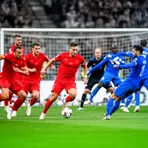
Showing strong behavior to try to defeat or pressure others
Antonyms

How Aggressive

Surface Forms
Morphology
The meaning is compositionally built: 'offensive' denotes attack-focused action and the preposition 'on' + definite article marks being in that state, so 'on the offensive' straightforwardly means 'actively attacking'. This state-construction is common cross-linguistically (e.g., Spanish 'estar a la ofensiva', French 'être à l'offensive'), so a B1 learner who knows the constituent words would very likely infer the meaning.
Etymology
On the offensive comes from a simple battle picture: soldiers move forward to attack, so being on the offensive means 'actively attacking or taking action' instead of defending.