
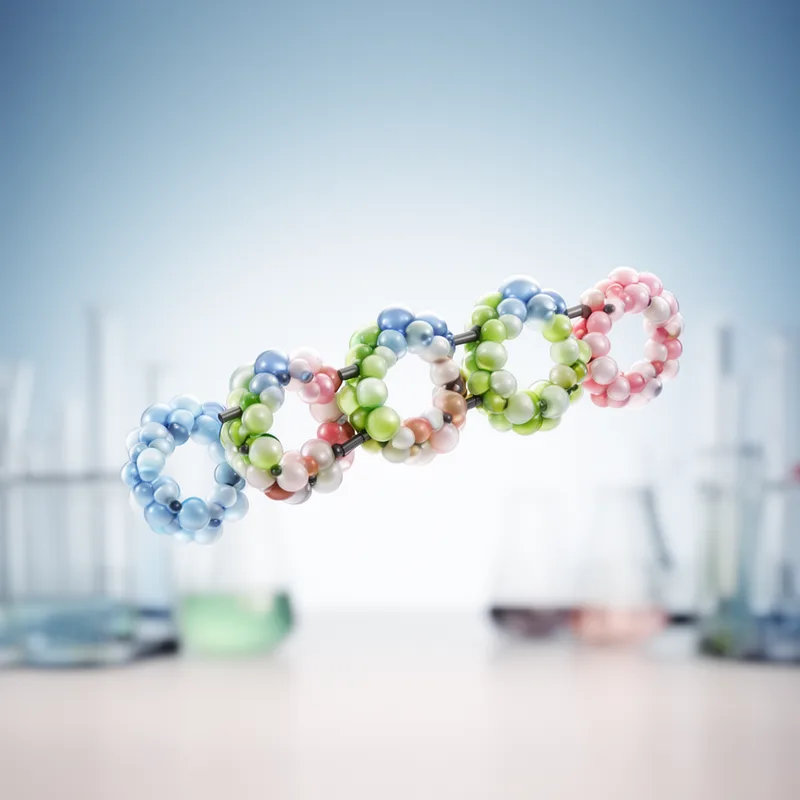
oligosaccharide
- noun
- /ˌɑːlɪɡoʊˈsækəraɪd/
- Specialized
- About 80% of the molecular weight of glycoproteins is made up of oligosaccharides, which surround the polypeptide core and protect much of it from proteolysis.
- milk oligosaccharides
- human milk oligosaccharides
- bovine oligosaccharides
Loading YouTube…
Watch on YouTubeAnd the answer is that human milk oligosaccharides are prebiotics.
- And the answer is that human milk oligosaccharides are prebiotics.
Examples
-
Protein glycosylation is the process of transferring a carbohydrate, usually an oligosaccharide, to a protein.
Academic text (2018) -
And the answer is that human milk oligosaccharides are prebiotics.
-
They're targeting, for instance, genes that carry the code for making oligosaccharides.
Academic text (2004) -
The middle surface protein of the HBV envelope contains a mannose-rich oligosaccharide to which MBP could bind.
Academic text (1997) -
Breast milk contains oligosaccharides and they feed bifidobacteria, and bifidobacteria benefit the baby's immune system.
-
So FODMAP, FODMAP, fermentable oligosaccharides, disaccharides, monosaccharides and polyols.
-
Xigris is a recombinant version of the natural plasma-derived activated protein C, from which it differs only by unique oligosaccharides in the carbohydrate portion of the molecule.
Academic text (2005) -
Lipooligosaccharide (LOS). A macromolecule consisting of lipid A and a core oligosaccharide found in the outer leaflet of the outer membrane of Gram-negative bacteria.
Academic text (2018) -
Plant physiologist Donald Hendrix at ARS' Western Cotton Research Laboratory pinpointed the basic chemistry of more than 30 complex sugars, called oligosaccharides, in whitefly honeydew.
Academic text (1997) -
Human milk oligosaccharides are essential for developing a baby's immune system.
How Long
- Specialized
 2
7.0
2
7.0


- Specialized
- Specialized
- Specialized

 1
8.2
1
8.2
- Specialized
1
6.8
Surface Forms
Morphology
oligosaccharide = saccharide (semi-transparent) = oligo + saccharide + oligo
Formally built from the combining form 'oligo-' (few) + 'saccharide' (a sugar-related term), but both elements are technical combining forms that many B1 learners will not know.
Etymology
Oligosaccharide comes from the Greek parts oligo- meaning 'few' and saccharide meaning 'sugar'. So an oligosaccharide is literally 'a few sugars' linked together, which explains why the word describes a short chain of sugar units.