
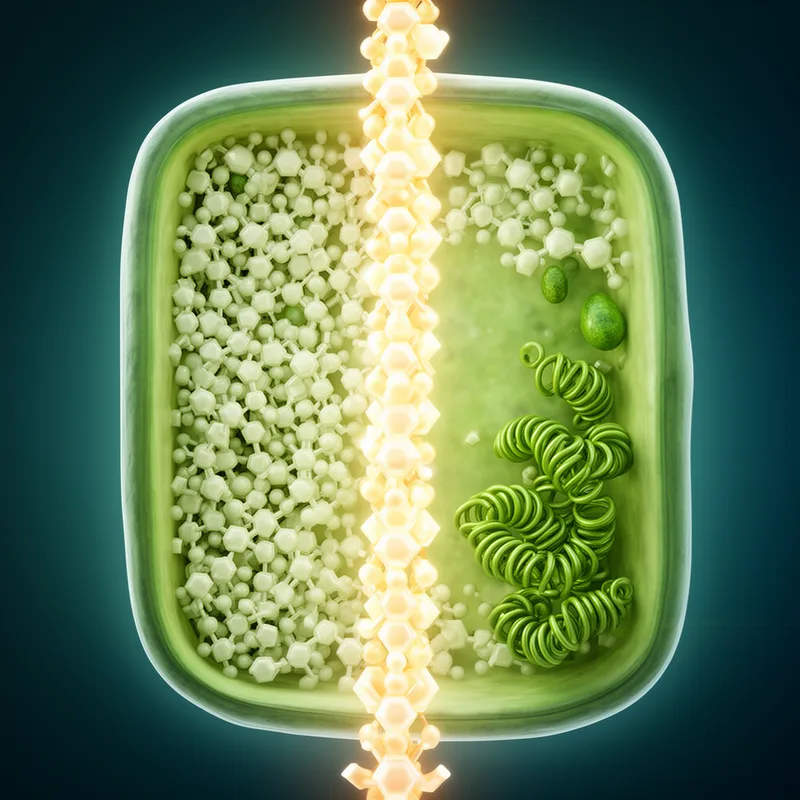
polysaccharide
 2
7.0
2
7.0

- noun
- /ˌpɑːliˈsækəraɪd/
- Specialized
- But Vicki Finkenstadt and J.L. Willett have shown that plant polysaccharides, such as starch and cellulose, work just as well.
- capsular polysaccharide
- polysaccharide vaccine
- pneumococcal polysaccharide
Loading YouTube…
Watch on YouTubeNow Manos is a common of sugar that's found in polysaccharides and glycoproteins.
- Now Manos is a common of sugar that's found in polysaccharides and glycoproteins.
Examples
-
So most of the muscles in your body store a polysaccharide known as glycogen.
-
Well, you may not know the function of polysaccharides in our precious body.
Blog text (31) -
And an example of a polysaccharide is starch.
-
But the researchers say the electroactive bioplastics can be made from other polysaccharide sources, too.
Academic text (2005) -
Immunogens of vaccines may be protein, lipo-polysaccharide, or polysaccharide.
Academic text (2014) -
The pneumococcal vaccine with 23 pneumococcal capsular polysaccharide types became available in 1983.
Academic text (2007) -
Conjugate meningococcal vaccines have significant advantages over polysaccharide vaccines and should be the preferred option for travelers.
Academic text (2011) -
During the 2012 meningitis season, three districts in Burkina Faso had vaccination campaigns that used a quadrivalent polysaccharide vaccine.
Academic text (2014) -
The serotype of a Streptococcus pneumoniae bacterium is designated according to the organism's polysaccharide capsule, its major virulence factor.
Academic text (2012) -
Starch is a common example of a polysaccharide that provides energy in many diets.
Synonyms
A long chain of simple sugar units like starch or cellulose
A chain of sugar units attached to proteins or fats in living cells
How Complex
- Specialized
2
7.0

- Specialized
- Specialized
- Specialized

 1
8.2
1
8.2
- Specialized
1
6.8
Surface Forms
Morphology
polysaccharide = saccharide (transparent) = poly + sacchar + ide
The meaning is a straightforward combination of 'poly-' meaning many and 'saccharide' meaning a sugar-related compound.
Etymology
The word polysaccharide comes from poly- 'many' and saccharide which is related to 'sugar', so it means 'many sugars'. That's why common substances like starch, cellulose, and glycogen are called polysaccharides: they are long chains of sugar units used for energy or for plant structure.