
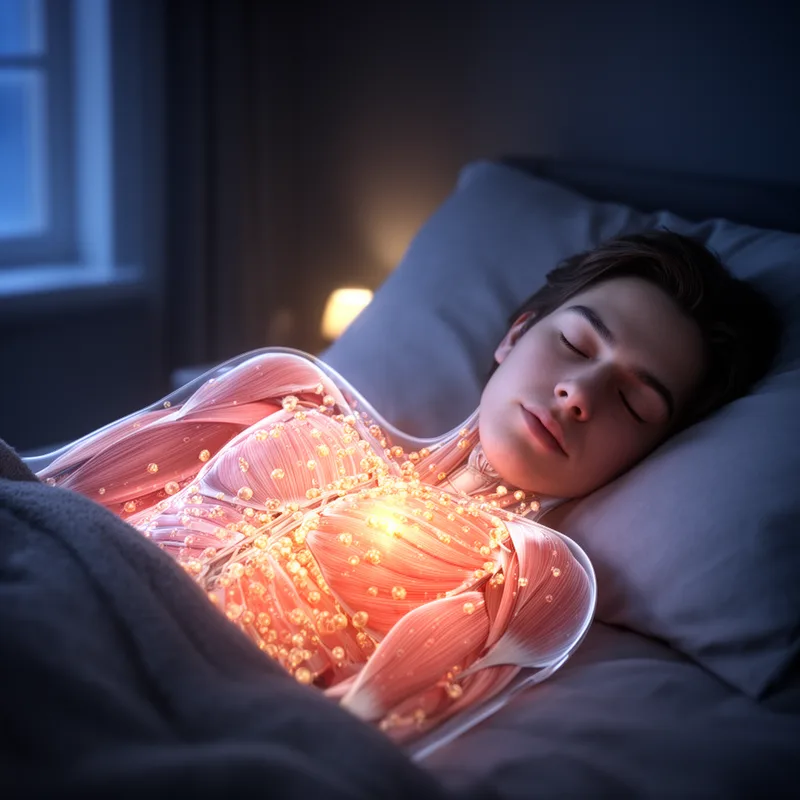
nonrapid eye movement sleep
- noun
- /nɒnˈræpɪd aɪ mʌvəmənt sliːp/
- Specialized
- During nonrapid eye movement sleep, the body repairs tissues and strengthens the immune system.
Examples
-
Infants spend more time in nonrapid eye movement sleep as their brains develop.
-
Disruptions in nonrapid eye movement sleep may contribute to various health issues.
-
During nonrapid eye movement sleep, the body repairs itself.
-
How long does nonrapid eye movement sleep last?
-
During nonrapid eye movement sleep, the body repairs tissues and strengthens the immune system.
-
Disruptions in nonrapid eye movement sleep may contribute to various health issues.
-
Infants spend more time in nonrapid eye movement sleep as their brains develop.
Synonyms

 1
6.3
1
6.3

A part of sleep without quick eye movements when you do not usually dream, making up most of the night
A stage of sleep without fast eye movements when you usually do not dream

A stage of sleep without quick eye movements or dreaming when the body repairs itself

The part of sleep when your eyes stay still and you do not dream
Antonyms

- Specialized

 1
3.7
1
3.7
A sleep stage when the eyes move quickly and most dreaming happens
How Rapid
- Specialized
1
3.7

- Specialized
Surface Forms
Morphology
nonrapid + eye + movement + sleep
The phrase is transparently compositional: a B1 learner who knows 'nonrapid' (not fast), 'eye', 'movement' and 'sleep' can infer it refers to a stage of sleep characterized by eye movements that are not rapid. Although the term is technical, its meaning follows directly from the constituent words and similar constructions exist cross-linguistically, so learners can deduce the intended sense without prior exposure.
Etymology
Nonrapid eye movement sleep means sleep when the eyes are not making quick movements and the body is quietly repairing itself. So, the image of someone lying still with calm eyes helps you remember it refers to the long, 'non-dreaming' part of sleep.