
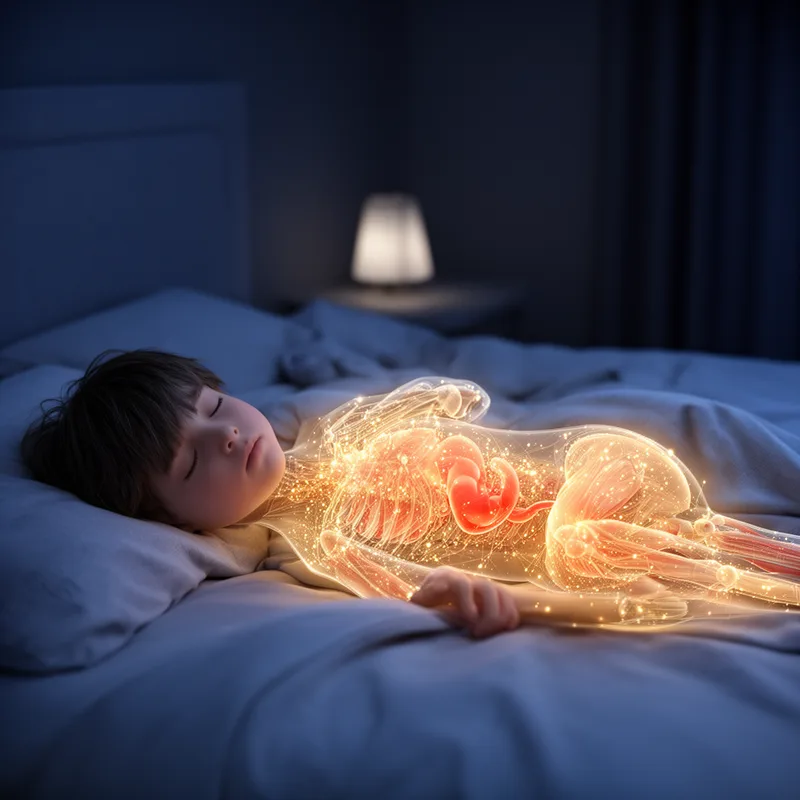
orthodox sleep
- noun
- Archaic
- Most deep restorative processes occur during periods of orthodox sleep.
Examples
-
During orthodox sleep, the body repairs itself.
-
The researchers measured the proportion of orthodox sleep in each subject's sleep cycle.
-
Children often spend more time in orthodox sleep than adults do.
-
Most adults experience orthodox sleep for about seven hours each night.
-
Children often spend more time in orthodox sleep than adults do.
-
Most deep restorative processes occur during periods of orthodox sleep.
-
The researchers measured the proportion of orthodox sleep in each subject's sleep cycle.
Synonyms

 1
6.3
1
6.3

A part of sleep without quick eye movements when you do not usually dream, making up most of the night

A stage of sleep without fast eye movements when you usually do not dream

A part of sleep without fast eye movements or dreams when the body repairs itself

The part of sleep when your eyes stay still and you do not dream
How Deep

Surface Forms
Morphology
The meaning 'a sleep stage without REM/dreaming' is a technical, physiological sense that cannot be predicted from the constituent words. 'Orthodox' normally means conventional or following established beliefs (a mainly religious/conventional sense in the provided definition), so a B1 learner who knows the literal meanings of 'orthodox' and 'sleep' would not infer the specific non‑REM stage meaning without prior exposure.
Etymology
The term orthodox sleep may come from using orthodox to mean 'regular' or 'normal'. It names the calm part of sleep without quick eye movement and dreaming, so the phrase now refers to the usual, non-dreaming stage.