

nonrapid eye movement
- noun
- /nɒnˈræpɪd aɪ mʌvəmənt/
- Specialized
- Most of your night's rest is spent in nonrapid eye movement sleep rather than dreaming.
Examples
-
During nonrapid eye movement sleep, the body repairs itself.
-
Sleep researchers closely monitor nonrapid eye movement phases to study sleep disorders.
-
Infants experience longer periods of nonrapid eye movement compared to adults.
-
Most of our sleep consists of nonrapid eye movements.
-
Most of your night's rest is spent in nonrapid eye movement sleep rather than dreaming.
-
Infants experience longer periods of nonrapid eye movement compared to adults.
-
During nonrapid eye movement sleep, the body repairs itself.
Synonyms

 1
6.3
1
6.3

A part of sleep without quick eye movements when you do not usually dream, making up most of the night

A part of sleep without fast eye movements or dreams when the body repairs itself
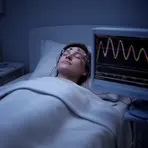
A stage of sleep without fast eye movements when you usually do not dream

A stage of sleep without quick eye movements or dreaming when the body repairs itself
Antonyms

- Specialized
2
3.9
A stage of sleep when the eyes move quickly and you have vivid dreams
How Rapid
- Specialized
2
3.9

- Specialized
Surface Forms
Morphology
The phrase is compositionally analyzable—a learner who knows 'non/ not', 'rapid', 'eye' and 'movement' can infer 'eye movements that are not rapid'. However, its established technical sense as a specific sleep stage (absence of REM/dreaming) is specialized domain knowledge and not fully predictable from the literal components, so it is only partially transparent to a B1 learner.
Etymology
Nonrapid eye movement comes from a simple image: during this sleep the eyes stay still and do not make quick movements, unlike dream sleep that has 'rapid eye movements'. So the name describes the quiet part of sleep when people usually do not 'dream' and get deep rest.