
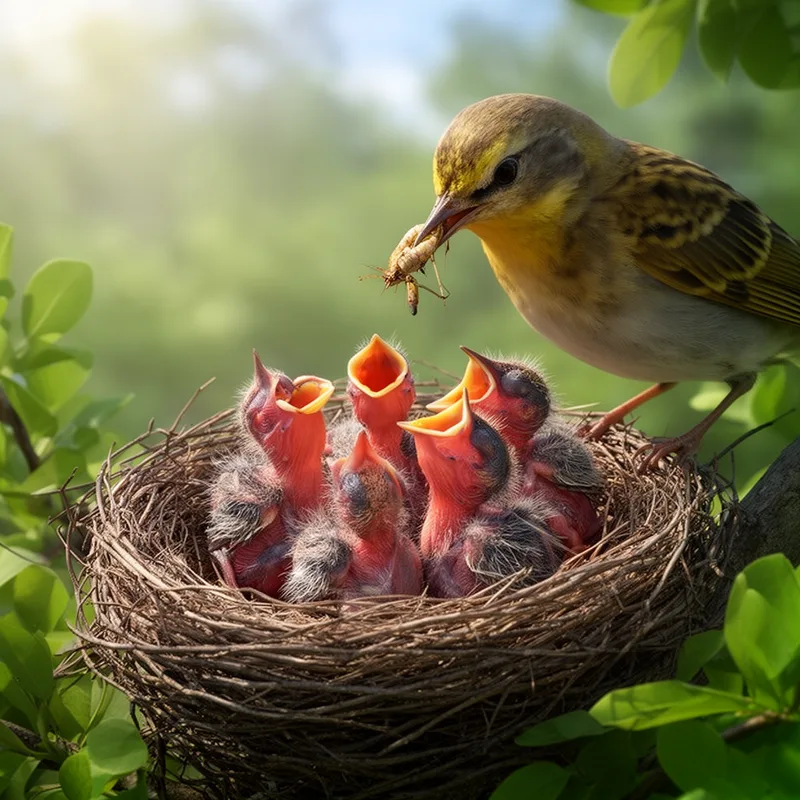
nidicolous
- adjective
- /ˌnɪdɪˈkoʊləs/
- Specialized
- Owls are nidicolous and remain in the nest until they can fly.
Examples
-
The nidicolous chicks rely on their parents for food.
-
Most songbirds are nidicolous, requiring extensive parental care after hatching.
-
Unlike nidifugous species, nidicolous chicks cannot feed themselves right away.
-
Many nidicolous species require protection during their early life stages.
-
Most songbirds are nidicolous, requiring extensive parental care after hatching.
-
Owls are nidicolous and stay in the nest until they are able to fly.
-
Many nidicolous species depend on their parents for food after birth.
Synonyms


 1
9.9
Born or hatched helpless and needing care from parents
Antonyms
How Dependent
- Specialized
1
9.9

- Specialized
- Specialized
- Specialized
1
9.9
Surface Forms
Morphology
Etymology
The word nidicolous comes from the Latin nidus 'nest' and the part -colous 'living in', like in the word colony. So a nidicolous chick is a 'nest dweller' that stays in the nest and needs care from its parents after hatching.