

negative charge
 2
4.1
2
4.1

- noun
- /ˈnɛɡətɪv tʃɑrdʒ/
- Specialized
- You have electrons and holes, which are just positive and negative charges, right.
Loading YouTube…
Watch on YouTubeBut right now you can think of it as just a little close pair of a positive and negative charge.
- But right now you can think of it as just a little close pair of a positive and negative charge.
- It absorbs more light and it has negative charge.
- You see that listed here has more of a negative charge connected to the Earth, even seasons like the fall.
- But the the the man who actually finally proved that they had negative charge was the French physicist Jean Perrin.
- So a negative charge and a positive charge and an electrical engineering and understanding of that, it forms a capacitor.
Examples
-
His first order of business was to show that the cathode rays carried a negative charge.
Academic text (1997) -
The cloud's negative charge is about 5 km in altitude but is concentrated inside the cloud, where the conductivity is decreased by the cloud droplets.
Academic text (1998) -
CO will also receive a negative charge.
Academic text (1996) -
So where is the center of net negative charge in this molecule?
-
Therefore, it has a single positive charge and typically has one electron with a negative charge going around it.
-
The positive charge is thought to be associated with bone formation, and the negative charge is thought to promote bone resorption.
Academic text (2002) -
When stress is placed on bone, a positive electric charge occurs on the convex side, and a negative charge occurs on the concave side.
Academic text (2002) -
When voltage is applied to the material, the positive charge on one electrode is attracted to the negative charge on the other, squeezing the material.
Academic text (2002) -
The usual negative cloud-to-ground lightning discharge occurs between the lower negative charge and the surface and is a primary participant in the global circuit.
Academic text (1998) -
The cells have an overall negative charge on their surface, so they naturally attract positive charges.
Antonyms
- Specialized
2
3.9
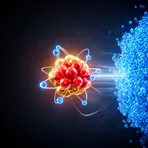
An electrical state when an object has fewer electrons than protons
How Negative

Surface Forms
Morphology
The meaning is directly compositional: 'negative' (less than zero / negatively charged) modifies 'charge' (an excess or deficiency of electrons), so the phrase denotes a charge with an excess of electrons. This is a standard, literal technical noun phrase with the same logic in many languages, so a B1 learner who knows both words will readily infer the meaning.
Etymology
The term negative charge uses the words negative (meaning 'minus') and charge (a word for stored electricity). It describes objects that have more tiny particles called electrons than protons, so they behave as if they carry extra 'minus' electricity, and that is why we say they have a negative charge.