

native orange
- noun
- Australian
- We planted a native orange in our garden to enjoy its delicious fruit and attract local wildlife.
Examples
-
The native orange is prized by Australian foragers for its tasty berries.
-
Many native oranges can be found in Queensland.
-
Aboriginal Australians have traditionally used the native orange as a food source in the wild.
-
We planted a native orange in our garden, hoping to attract more wildlife.
-
The native orange tree grows in the wild.
-
Aboriginal Australians have traditionally used the native orange as a food source in the wild.
-
The native orange is prized by Australian foragers for its tangy and edible berries.
Synonyms
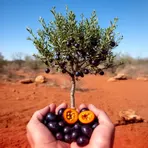
A small Australian tree that grows dark purple fruit people eat, called wild orange
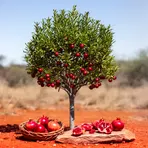
A small Australian tree that makes tart red fruit you can eat

A small Australian tree that has edible fruit like a pomegranate

An Australian tree with edible fruit and nutlike seeds
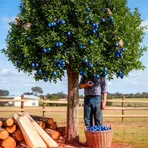
An Australian tree with shiny leaves, blue fruit you can eat, and wood used for building
Surface Forms
Morphology
A learner who knows 'native' (indigenous) and 'orange' (a type of fruit/tree) will reasonably infer that this refers to a locally occurring type of orange/tree, so the basic idea is compositional. However, the specific referent (an Australian tree with dark purple fruit, not the familiar citrus orange) is not derivable from the constituents and could mislead learners, so the relation is only partly predictable.
Etymology
The compound noun native orange comes from early settlers who used orange to name small, round edible fruits and native to show the plant grew locally. So people called the dark purple berries of this Australian tree 'native oranges', and today native orange means that local tree with edible fruit, even though the berries are not a 'true orange'.

