
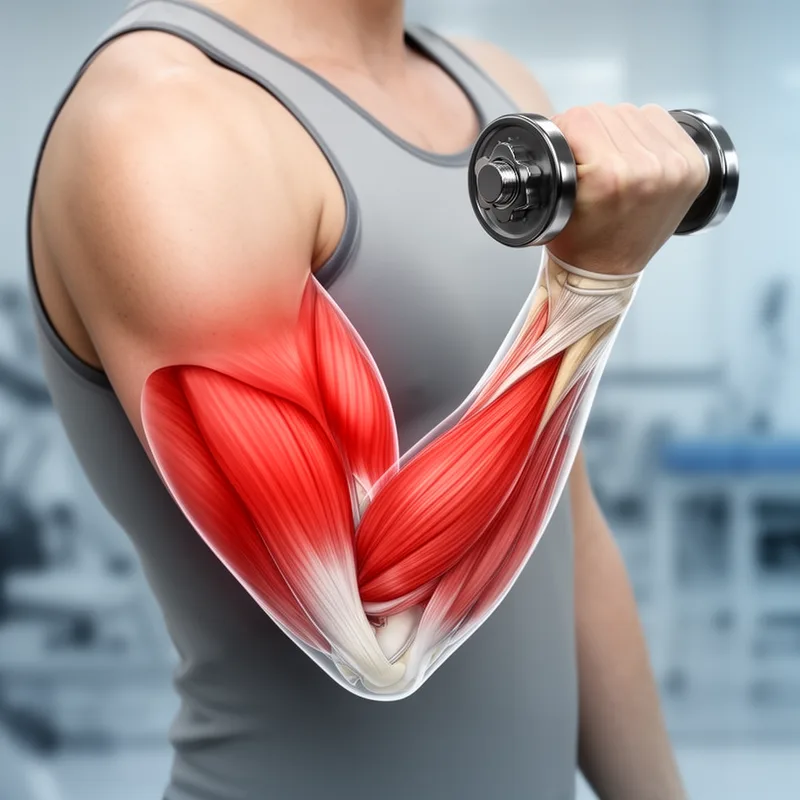
musculus biceps brachii
- noun
- /ˈmʌskjələs ˈbaɪsɛps ˈbrækiˌaɪ/
- Specialized
- The musculus biceps brachii is responsible for flexing your elbow when you lift a weight.
Examples
-
During the curl exercise, the musculus biceps brachii contracts to raise the forearm.
-
Injury to the musculus biceps brachii can result in decreased arm strength and limited movement.
-
The musculus biceps brachii is crucial for arm movements.
-
During the workout, I felt my musculus biceps brachii strain.
-
During the curl exercise, the musculus biceps brachii contracts to raise the forearm.
-
Injury to the musculus biceps brachii can result in decreased arm strength and limited movement.
-
The musculus biceps brachii is responsible for flexing your elbow when you lift a weight.
Synonyms

 26
3.2
26
3.2

A large muscle at the front of the upper arm with two parts that bends the elbow
A muscle in the upper arm that bends the elbow and turns the forearm so the palm faces up
A large arm muscle that bends the elbow and turns the palm up
How Big


Surface Forms
Morphology
The phrase is composed of recognisable elements: 'musculus' signals a muscle and 'biceps' names the two-headed upper-arm muscle, so a learner who knows those parts can infer this refers to a muscle in the arm. However the form uses Latin anatomical morphology (e.g. 'brachii' is a genitive/technical element not transparent to B1 learners) and the specific functional senses (flexing the elbow, supinating the forearm) are technical rather than directly derivable, making the expression only partially predictable.
Etymology
Musculus biceps brachii comes from old Latin words that describe the muscle. Musculus means 'little mouse' because a moving muscle looked like a small mouse under the skin, biceps means 'two-headed', and brachii means 'of the arm', so the name paints the picture of a 'two-headed little mouse on the arm' and is used for the upper-arm muscle that bends the elbow and turns the palm up.