
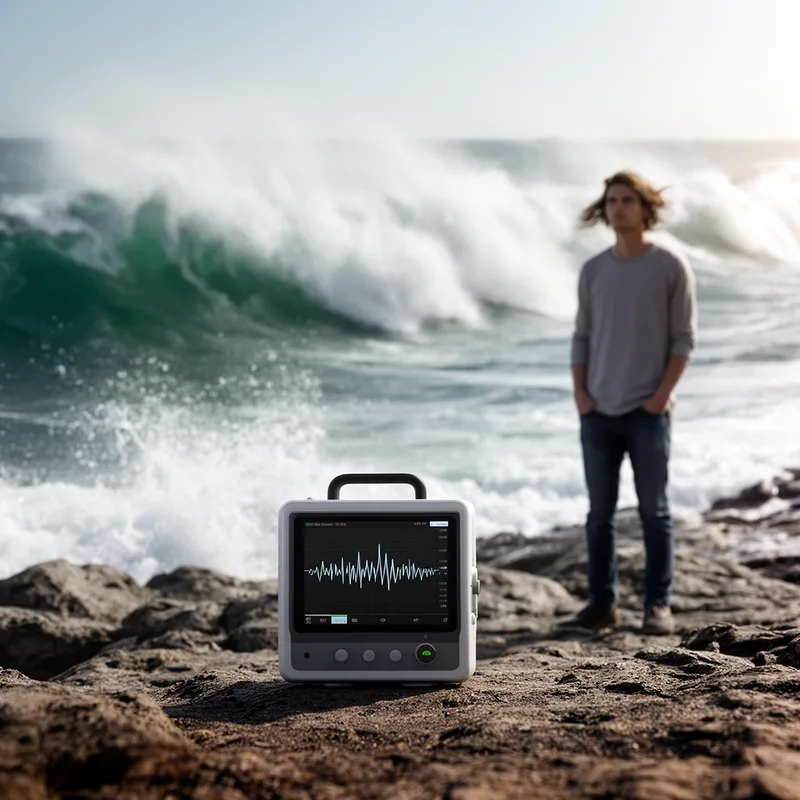
microseism
- noun
- /ˌmaɪkroʊˈsaɪzəm/
- Specialized
- The seismologist detected a microseism triggered by distant ocean waves.
Examples
-
Unlike an earthquake, a microseism is generally not felt by people.
-
Sensitive instruments recorded a series of microseisms throughout the night.
-
A microseism can be hard to detect.
-
The researchers detected a microseism during their study.
-
Sensitive instruments recorded a series of microseisms throughout the night.
-
The seismologist detected a microseism triggered by distant ocean waves.
-
Unlike an earthquake, a microseism is generally not felt by people.
Synonyms

 25
4.9

A small earthquake that moves the ground slightly
 3
4.6
A sudden shaking of the ground that happens when energy is released underground
 1
3.7
A small earthquake that causes little or no damage


 1
9.5
A shaking of the ground caused by movement under the earth
How Strong

Surface Forms
Morphology
microseism = seism (opaque) = micro + seism
The prefix micro- is transparent, but seism is not a clear standalone English base for most learners, so the overall meaning is not easily recoverable.
Etymology
The word microseism is made of micro- 'small' and seism 'shake', the same root found in seismic. So a microseism is a 'small shake' of the ground, usually too weak to feel and often caused by ocean waves.