
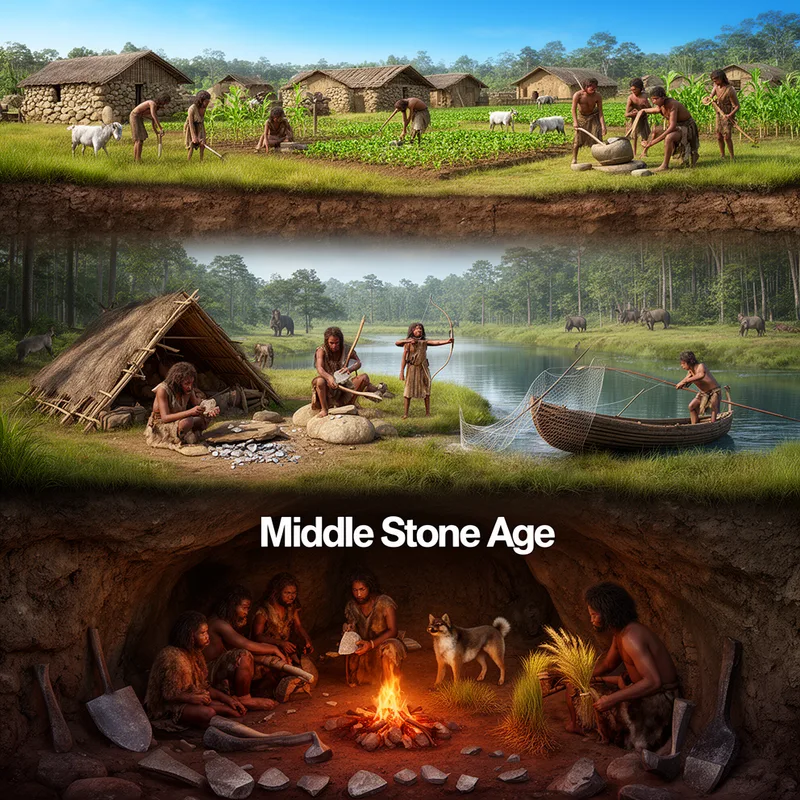
mesolithic


 1
9.9
1
9.9
- adjective
- /ˌmɛzəˈlɪθɪk/
- Specialized
- The people back then were what's called Mesolithic hunter gatherers.
- Mesolithic and Neolithic
Examples
-
The discovery of pottery from Mesolithic sites shows that people were starting to adopt new methods of food preparation.
-
Researchers found evidence of Mesolithic communities living along the riverbanks, utilizing aquatic resources for sustenance.
-
In the transition from the Paleolithic to the Mesolithic period, however, the role of women did not change significantly.
Academic text (2000) -
Later came a freshwater reed swamp and a salt marsh beside the river: a rich environment for Mesolithic hunter-fisher-gatherers.
Academic text (2007) -
The team also found more than a thousand artifacts dating from 11,000 to 9,000 years ago, indicating a rich history of Mesolithic settlement on the island.
Academic text (2010) -
Early contacts developed during the Mesolithic and Neolithic ages, between the Uralic foragers of the north and the non-Indo-European population of the south.
Academic text (2000) -
This year's research also included a large number of worked flint that shows that people were living in Lyminge in the Mesolithic era, which stretched from 10,000 to 5,000 BC.
Blog text (14) -
When he cut it, his spade bounced off a finely carved bone harpoon point similar to those found at Mesolithic hunting sites on mainland Britain, Denmark, and Sweden.
Academic text (2007) -
During the Mesolithic period, early humans began to develop more complex tools for hunting and gathering.
Compounds

The middle part of the Stone Age when people used small stone tools and began to live in one place
How Advanced

Surface Forms
Morphology
mesolithic = lithic (semi-transparent) = meso + lith + ic
The structure is regular (meso- 'middle' + lithic 'of stone'), so the meaning 'Middle Stone Age' is compositional, but the combining forms are specialized and not familiar to average learners.
Etymology
Mesolithic comes from two Greek parts: meso- meaning 'middle' and -lithic meaning 'stone'. So mesolithic literally means 'Middle Stone' and names the time between the 'old' Stone Age (Paleolithic) and the 'new' Stone Age (Neolithic).