

meadow fescue
- noun
- The farmer planted meadow fescue to improve the quality of his grazing fields.
Examples
-
Lawns sown with meadow fescue are known for their lush green appearance.
-
Researchers are studying meadow fescue for its resilience to different climates.
-
The farmer planted meadow fescue in his fields.
-
Many gardeners prefer meadow fescue for its durability.
-
Lawns sown with meadow fescue are known for their lush green appearance.
-
The farmer planted meadow fescue to improve the quality of his grazing fields.
-
Researchers are studying meadow fescue for its resilience to different climates.
Synonyms

 2
7.7
2
7.7

A grass with wide flat leaves grown for pastures, hay, and lawns
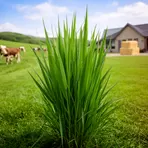
A grass with wide flat leaves grown in Europe and America for pasture, hay and lawns

A grass with wide flat leaves grown for lawns and for animals to eat
Surface Forms
Morphology
The noun is a straightforward compound: 'meadow' (grassland) + 'fescue' (a type of grass), so the meaning ‘a fescue that grows in or is used for meadows/pasture’ is directly derivable from the parts. This compositional pattern (location/type) is common and cross-linguistically transparent, so a B1 learner who knows both words would understand the MWE.
Etymology
Meadow fescue probably comes from a simple picture: a type of grass called fescue growing in a meadow. So the name now means a hardy 'grass' used for pasture, hay, and lawns.