

Festuca elatior
- noun
- Specialized
- Farmers often sow Festuca elatior in their fields to produce high-quality hay.
Examples
-
The wide, flat leaves of Festuca elatior help create a lush appearance for lawns.
-
Studies show that Festuca elatior thrives in both European and American climates.
-
The Festuca elatior thrives in well-drained soils.
-
Have you ever seen a field of Festuca elatior?
-
Farmers often sow Festuca elatior in their fields to produce high-quality hay.
-
The wide, flat leaves of Festuca elatior create a lush and attractive lawn.
-
Studies show that Festuca elatior adapts well to various soil types in Europe and America.
Synonyms

 2
7.7
2
7.7

A grass with wide flat leaves grown for pastures, hay, and lawns
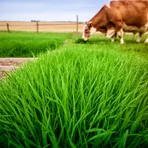
A grass with wide flat leaves grown for lawns and for animals to eat

A grass that lives for many years with wide flat leaves grown for animal grazing, hay, and lawns
Surface Forms
Morphology
Festuca + elatior
This is a Latin binomial (genus + specific epithet) rather than a normal compositional English phrase. Even if a learner knows 'Festuca' as a grass genus, 'elatior' is a non‑English/lexicalized Latin epithet (not found in the dictionary) and the full taxonomic meaning (‘a particular species of grass…’) is not derivable from the parts for a B1 learner. Because it functions as a technical proper name rather than a transparent composition, it is opaque to learners.
Etymology
Festuca elatior comes from Latin: Festuca means 'straw' or 'tuft' and elatior means 'taller'. So the name makes you think of a taller, straw-like grass and helps you remember it is a wide-leaved grass used for hay and lawns.