

fescue grass
- noun
- /ˈfɛskjuː ɡræs/
- To create a lush lawn, consider planting fescue grass in shady areas where other grasses struggle.
Examples
-
The farmer decided to cultivate fescue grass for hay due to its rapid growth and nutritional value.
-
Those were hearty country types, or rather they were city people who, through taste and habit, had evolved into country types; the kind of people who showed dogs, kept sheep, talked about fescue grass, and, like responsible citizens, manned the polls at election time.
Fiction book (1990) -
The most explicit example for this is the larvae of the Silver-spotted Skipper, which feed on sheep's fescue grass, which in turn is never allowed to grow too plentifully by grazing cows.
-
Many golf courses use fescue grass for its durability and aesthetic appeal.
Synonyms

 2
7.7
2
7.7

A grass with wide flat leaves grown for pastures, hay, and lawns
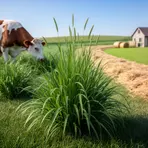
A grass that lives for many years with wide flat leaves grown for animal grazing, hay, and lawns
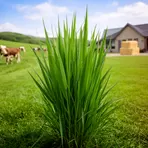
A grass with wide flat leaves grown in Europe and America for pasture, hay and lawns
Surface Forms
Morphology
The meaning 'a type of grass with wide, flat leaves' is directly and compositionally derived from 'fescue' (a named grass variety) + 'grass' (the plant). This noun+noun type-labeling pattern is a straightforward, cross-linguistic compositional pattern, so a B1 learner who knows the constituents would readily understand the MWE.
Etymology
Fescue grass may come from the old word 'festuca', which meant a stalk or piece of straw and gives a clear picture of a stalky plant. So fescue (the stalk) plus grass is why the name now means a tough, wide-leaved grass used in lawns and pastures.