
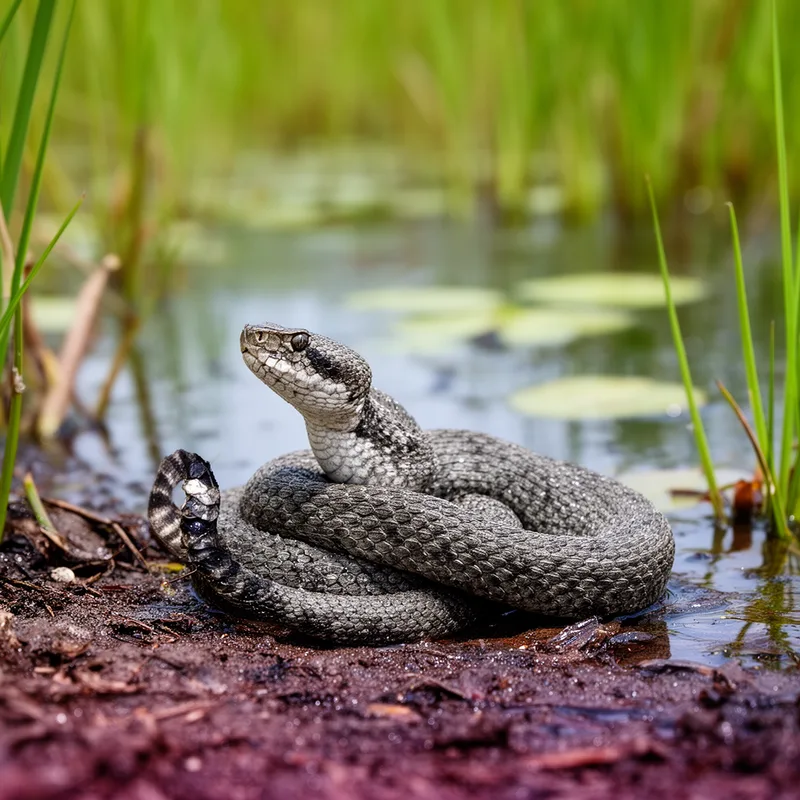
massasauga rattler
- noun
- /ˌmæsəˈsɔːɡə ˈrætlər/
- US
- The massasauga rattler is rarely seen but plays an important role in the local ecosystem.
Examples
-
The massasauga rattler is often found near wetlands.
-
Park rangers warned hikers to watch out for the massasauga rattler in the wetlands.
-
Despite its reputation, the massasauga rattler is generally shy and avoids human contact.
-
Many people fear the massasauga rattler due to its venom.
-
The massasauga rattler can be found in wetlands across the Midwest.
-
Hikers in the area were warned about the presence of the massasauga rattler, which can deliver a venomous bite.
-
The massasauga rattler, often hiding in tall grass, is known for its distinctive rattling warning.
Synonyms
 42
4.1
42
4.1

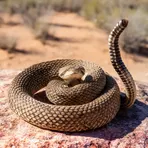
A dangerous snake from America with a rattle on its tail that warns others
 14
8.2
14
8.2
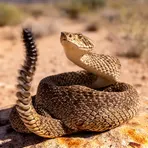
A snake that can bite with poison and has a tail that makes a rattling sound when shaken
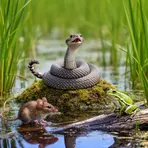
A small rattlesnake with venom that lives in swamps and eats mice and frogs
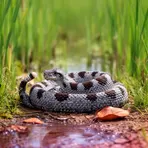
A small venomous rattlesnake in North America, usually gray with dark bands
Surface Forms
Morphology
Both constituents denote types of rattlesnakes: 'massasauga' is a specific small rattlesnake and 'rattler' signals a rattlesnake. The combined noun simply identifies the species and is directly derivable from the parts (noun+noun compounding), so a B1 learner who knows both words would understand the meaning.
Etymology
Massasauga rattler may come from a Native American word for the 'swamp' or area where the snake lives and rattler for its noisy tail. So the name paints a simple picture of a rattling snake from the marsh, which helps you remember it is a small venomous rattlesnake found in wet places.