
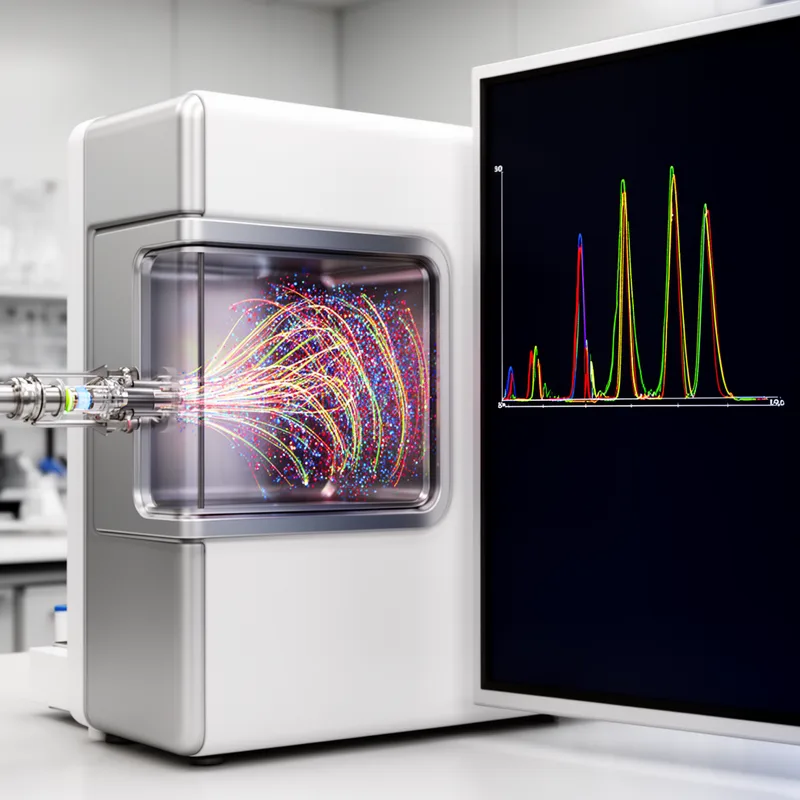
mass spectrograph
- noun
- /mæs ˈspɛktrəˌgræf/
- Specialized
- The laboratory purchased a new mass spectrograph to analyze chemical compounds more efficiently.
Examples
-
The research paper describes improvements made to the existing mass spectrograph design.
-
Using a mass spectrograph, scientists identified the isotopic composition of the sample.
-
The mass spectrograph provided detailed results.
-
Researchers use a mass spectrograph to analyze samples.
-
Researchers used the mass spectrograph to analyze the composition of the unknown substance.
-
The mass spectrograph allowed scientists to determine the molecular weights of various compounds accurately.
-
By examining the data produced by the mass spectrograph, they could identify the presence of specific isotopes.
Synonyms

 13
7.2
13
7.2

A machine that measures light or separates charged particles to identify substances
 3
5.5
3
5.5
A machine that measures the masses of charged particles from a sample
Surface Forms
Morphology
The compound is directly analyzable: 'mass' specifies the type of spectrum and 'spectrograph' is an instrument that records spectra, so a 'mass spectrograph' is readily understood as an instrument that records or separates by mass. This follows a common noun–noun composition pattern (type + instrument) found cross-linguistically, so a learner who knows both constituents can infer the meaning despite the term's technical domain.
Etymology
The name mass spectrograph comes from the parts mass, spectro, and graph: mass is the weight of tiny particles, spectro points to a 'spectrum' (a range), and graph means a 'drawing' or line that shows data. The machine sorts charged particles by their weight and makes that 'spectrum' into a picture, so the name means an 'instrument' that shows which masses are present.