

mass
 190
4.1
190
4.1

- noun
- /mæs/
- Specialized
- The researchers calculated the mass of the asteroid to assess its potential impact on Earth.
- body mass
- body mass index
- body mass index
Loading YouTube…
Watch on YouTubeFor example, the mass of a proton is.
- For example, the mass of a proton is.
- If there was not a missing mass, they would just fly away.
- Outside the point mass, there is no matter nothing.
- It's a billions of times the mass of the sun, really heavy.
- That is, you keep the mass fixed, but you shrink the radius.
Examples
-
The net force acting upon the object and the mass of the object itself.
-
Memory has no color and very little mass, and of course it is incomplete.
Fiction book (2000) -
But we do not know the mass, right?
-
All we have to do is hit him with something of equal or greater mass.
-
It is the product of mass times velocity squared.
-
And we estimate that it has a diameter of over 550 kilometers and a mass roughly 1/4 the size of our moon.
-
So in Einstein's theory of gravity, mass bends light.
-
It's saying that the force of attraction between two bodies... is in direct proportion to the product of their masses... and in inverse proportion to the square of the distance between them.
-
One kilogram is the mass in a cubic centimeter of air: mass = atoms + molecules.
Academic text (2012) -
The scientist measured the mass of the rock to determine its weight in the gravitational field.
Antonyms


Compounds

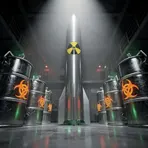
- Formal
96
4.8
A thing that can kill or injure many people, like nuclear, chemical and biological devices


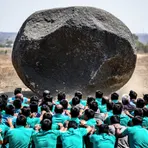




- Specialized
5
5.7
Point in an object where we think its mass is concentrated for balance and movement

- Specialized
4
3.2
A number that shows if a person's weight is healthy for their height


- Specialized
3
5.5
A machine that measures the masses of charged particles from a sample
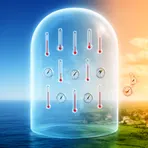
- Specialized
3
3.4
A large area of air with about the same temperature, humidity, and pressure


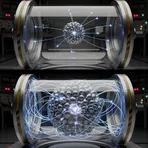
- Specialized
2
6.2
The smallest amount of nuclear material needed to start and keep a chain reaction


- Specialized
1
3.6
A number that tells how heavy one atom of an element is in atomic mass units

- Specialized
1
4.0
The total mass in a system that does not gain or lose matter stays the same over time



- Formal
1
4.9
A computer attack that can damage systems and harm many people





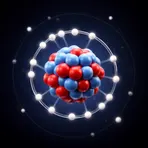

- Specialized
 1
8.6
1
8.6
A measure of how hard it is to change an object's motion when a force pushes it

- Specialized
1
7.4
The amount of matter in an object measured when it is not moving, not how heavy it feels
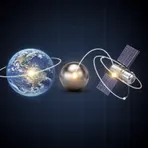

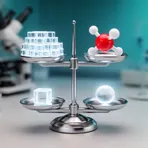

- Specialized
The speed of a chemical reaction depends on the amounts of the substances that react


- Specialized
The mass difference between a nucleus inside an atom and the total mass of its protons and neutrons
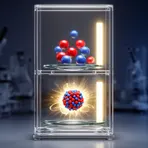
- Specialized
Amount of mass missing when protons and neutrons join and release energy



- Specialized
A word that names something you cannot count and usually has no plural form

A system of underground or above ground trains that carries many people quickly

- Specialized
A machine that separates tiny charged parts of atoms by mass and shows them on a graph

- Specialized
A theory that large areas of the brain work together for complex tasks
- Specialized
The idea that mass can turn into energy and energy can turn into mass
- Specialized
A measure of how strongly an object pulls other objects by gravity

- Specialized
The mass of an atom compared with one twelfth of a carbon-12 atom
- Specialized
The mass of all the atoms in one molecule compared with one twelfth of a carbon-12 atom
- Specialized
The mass a moving object seems to have as its speed gets near the speed of light

How Heavy

Surface Forms
Etymology
Mass in physics comes from the old Latin word massa, meaning 'lump' or 'clump'. To measure an object's mass is to measure how much 'stuff' is in that lump and how hard it is to move. So, mass tells us the amount of matter and why heavy things need more force to move.