
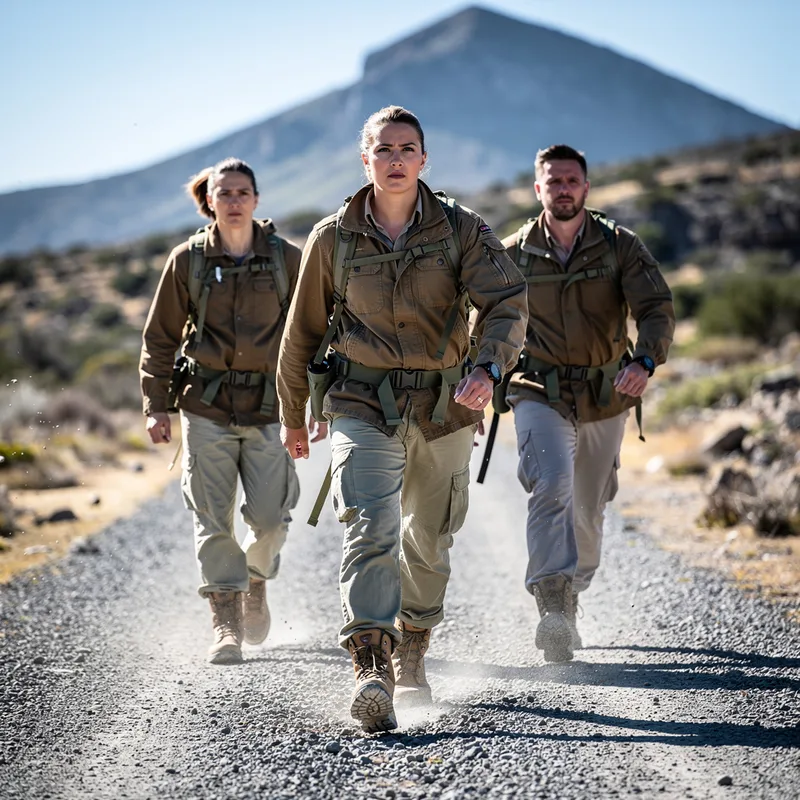
to march on
 30
3.3
30
3.3

- phrasal verb
- /mɑrtʃ ɑn/
- Members of the Coalition to March on the RNC and Stop the War show off a banner.
Loading YouTube…
Watch on YouTubeThey're marching on Saint Louis, they're marching on Kansas City.
- They're marching on Saint Louis, they're marching on Kansas City.
- When my legions March on Washington, we will burn the Constitution and the president will bow it up my feet.
- When my legions March on Washington, we are going to burn the Constitution and the president will kneel at my feet.
Examples
-
United march on to the next round.
-
But we are marching on .
-
We sure are getting more and more reasons to march on Washington by the day.
Blog text (17) -
We sit here on our computers, and meanwhile, they march on with "The Plan."
Blog text (30) -
Whose picture are many of these protesters holding up as they march on American interests?
Blog text (30) -
You're the one that wants to march on Washington every five minutes.
Fiction book (1999) -
We're marching on wall street to show 'em who's king!
-
INSIGHT civil servants are marching on Washington, DC and the president knows why.
-
Gentlemen, l am pleased to announce... that we are at last ready to march on Osterlich.
-
Time always marches on, no matter what obstacles we face.
Synonyms
 ∞
1.0
∞
1.0
Keep happening or keep being done without stopping
 670
3.1
670
3.1
To start the next stage or activity and stop focusing on the past
 417
3.4
417
3.4
To help something move forward or become better
 209
2.5
209
2.5
Move forward or get better over time
 161
4.4
161
4.4
Move forward without stopping or slowing down
 81
3.0
81
3.0
Go forward or leave a place when someone tells you to
 61
2.7
61
2.7
To start or continue something so it gets closer to a goal
 21
3.7
21
3.7
Move forward or keep going despite difficulty
 3
3.7
3
3.7
To move forward steadily despite problems

Moving forward or making progress slowly and steadily
Antonyms


How Steady

Surface Forms
Morphology
The core idea of steady forward movement is directly signalled by 'march' (regular forward walking) combined with 'on' (continuation), so a learner who knows both words can reasonably infer meanings like 'continue to move forward' or 'progress'. However, the extension to abstract domains (e.g. 'time marches on') is a metaphorical mapping rather than a literal composition, so the sense is predictable but not fully literal or automatic for all learners.
Etymology
March on comes from the picture of soldiers walking forward in steady steps toward a destination. That's why march on now means 'to continue to move forward' or 'to keep progressing', for example with time or a project.