
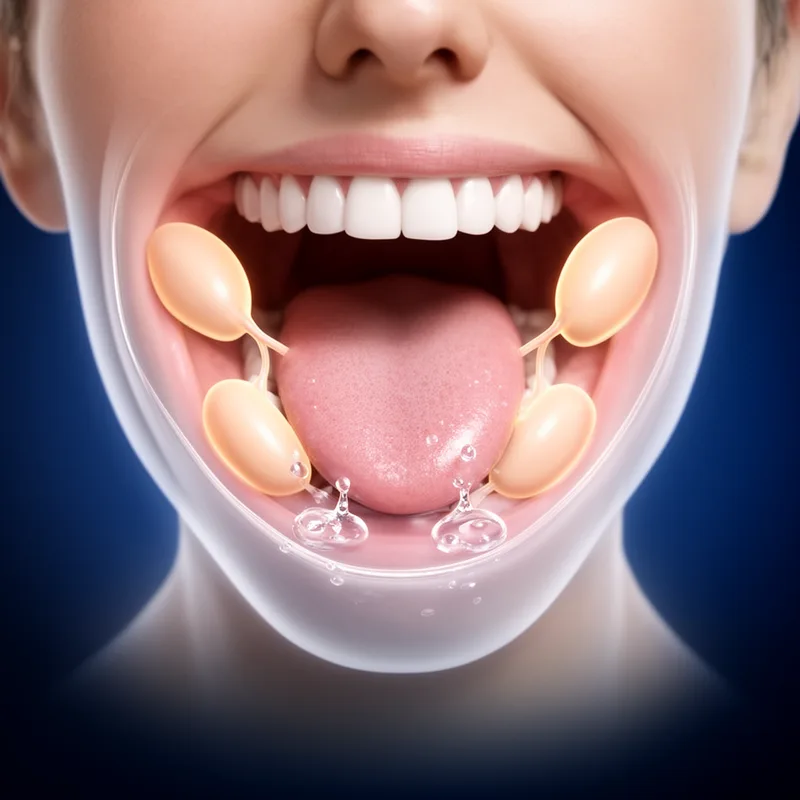
mandibular gland
- noun
- /mænˈdɪbjələr ɡlænd/
- Specialized
- Saliva from the mandibular gland helps keep the mouth moist while sleeping.
Examples
-
Swelling in the mandibular gland can indicate an infection or blockage.
-
The mandibular gland produces more saliva at night than during the day.
-
The mandibular gland is essential for saliva production.
-
Many animals have a well-developed mandibular gland.
-
Saliva from the mandibular gland helps keep the mouth moist while sleeping.
-
Swelling in the mandibular gland can indicate an infection or blockage.
-
The mandibular gland produces more saliva at night than during the day.
Synonyms

A gland under the lower jaw that makes saliva and releases it under the tongue, often at night

A small part under the lower jaw that makes saliva and sends it under the tongue

A gland under the lower jaw that makes saliva

One of two glands beneath the lower jaw that make saliva, often at night

A gland under the lower jaw that makes saliva
Surface Forms
Morphology
The meaning is a direct compositional combination: 'mandibular' (= relating to the lower jaw) specifies the location of a 'gland' (an organ that releases fluids), so the phrase denotes a gland in the lower jaw. This anatomical adjective+noun pattern is regular and cross-linguistically common, so a learner who knows both constituents would readily infer the MWE's meaning.
Etymology
The term mandibular gland comes from old Latin words: mandibular, from mandible, meaning 'jaw', and gland meaning 'a part that makes liquid'. So it literally means the gland under the lower jaw, which is why it names the salivary gland that sends saliva under the tongue.

