

to make a statement
 125
3.8
125
3.8

- phrasal verb
- Everyone in the group has the opportunity to make a statement of appreciation to someone else in the room.
Loading YouTube…
Watch on YouTubeHe simply makes a statement, that's all.
- He simply makes a statement, that's all.
- They're big and they're funky and I think they make a statement.
- Instead, what happened was the the chief, chief Moose made a statement that the streets are safe, the schools are safe.
- Being as kind as I can about my sister, I think she likes to make a statement and challenge the status quo.
- But if we're here in Hollywood, then necessarily you are looking to make a mark, make a statement and be paid for it.
- Hello, I wanted to make a statement on what I said in my previous live stream.
Examples
-
If either one of you would like to make a statement before the commission passes judgment, you may do so at this time.
-
Trying to make a statement, huh?
-
And then he was going to make a statement and find his way out.
-
Unless you would like to make a statement otherwise.
-
I need to make a statement.
-
Are you gonna make a statement?
-
The President will be making a statement in due time; until then, we have no comment.
Fiction book (1997) -
It's the perfect time to make a statement, to make a statement to let you know where your life ends and mine begins.
-
Being as kind as I can about my sister, I think she likes to make a statement and challenge the status quo.
-
On behalf of the Hassan family, I would like to make a statement to the press.
Synonyms
 ∞
1.5
∞
1.5
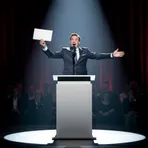
To tell people officially about something, often in public
 ∞
2.3
∞
2.3
To show ideas and feelings by words or actions
 950
3.7
950
3.7
To officially tell other people or officials about something
 229
3.9
229
3.9
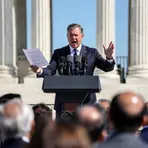
To clearly and firmly say your needs or opinions
 229
5.3
229
5.3
To officially announce something to the public
 220
3.4
220
3.4
To say your opinion or feelings openly even when it is difficult
 152
3.2
152
3.2
To say something aloud, especially an opinion or feeling
 135
3.1
135
3.1
Give your opinion clearly and firmly even when it is difficult
 81
3.4
81
3.4
To make people understand an idea or feeling without saying it directly
 24
7.9
24
7.9
To say what you think about something
 21
3.5
21
3.5
Say what you think openly
 15
3.2
15
3.2
To say your thoughts or views aloud in public
 15
4.3
15
4.3
To put thoughts or feelings into words
 2
3.4
2
3.4
To tell important news to many people in public
 1
4.6
1
4.6
To say or show something that attracts attention and shows confidence
Antonyms


How Public

Surface Forms
Morphology
The meaning 'to express an opinion or message publicly' is directly derivable from combining 'make' (to produce/cause) with 'statement' (a verbal or written expression); the article 'a' is semantically neutral. This compositional pattern is common cross-linguistically, so a B1 learner who knows the constituent words would readily infer the MWE's meaning.
Etymology
Make a statement comes from the simple image of someone making a visible statement, like painting a sign or wearing bold clothes to show what they believe. So, make a statement now means 'to express an opinion' or 'to show your values' in a way people notice.