

to make water
 1
9.1
1
9.1

- idiom
- NSFW
- She hummed and made water at the same time, like a song with instrumentals.
- had to make water
Examples
-
Somebody touch him, he make water in his pants like a little baby.
-
How do you think I feel having to ask you can I go make water... ...like I am some child.
-
When you make water, make water.
-
I got to go make water.
-
You know, there once was a man who went outside of his hut at night to make water.
Fiction book (1990) -
FAIGAN: To make water, and what happened?
Fiction book (1990) -
But he had to make water and deferred his studies while he slid quietly out of bed and headed for the bathroom.
Fiction book (1993) -
(The King) called for his urinal, and having made water in it, he cast it and viewed it (as physicians do) a pretty while; at last he swore soberly that he saw nothing in the man's water, but that he might live if it pleased the King.
Academic text (1997) -
I need to make water before we continue our hike.
-
She politely excused herself to make water during the meeting.
Synonyms
 947
8.3
947
8.3
To pass urine in rude speech
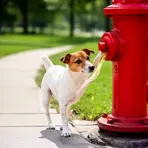 371
2.6
371
2.6
To let out the body's yellow liquid
 69
3.3
69
3.3
To pass urine
 52
9.9
52
9.9
To pee in a rude way
 41
9.3
41
9.3
To pee or pass urine from your body
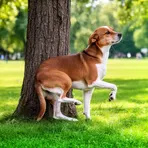 11
7.5
11
7.5
To pee or poo, usually in a toilet
 5
9.5
5
9.5
To pee when you need the toilet
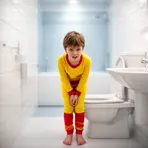 4
9.7
4
9.7
To pee when you need to go to the toilet
 2
8.1
2
8.1
To pass urine from the body, often said to children
 1
9.2
1
9.2
To pee, often used about children or animals

 1
9.9
1
9.9
To go to the toilet to pee

To let urine come out of your body

To pass urine from the body
Surface Forms
Morphology
The meaning is partially derivable: 'make' (produce) combined with 'water' can map onto the euphemistic sense of urine, so there is a compositional link. However, most B1 learners will not automatically know that English uses 'water' to mean urine (it's somewhat old-fashioned/polite), so the specific sense is not fully predictable without prior exposure; cross-linguistic parallels (e.g. Spanish 'hacer pis') make the logic plausible but not guaranteed for learners.
Etymology
The verb make water may come from a simple old image: to make or produce water, that is, to let a small amount of liquid fall into a pot. So the phrase came to mean 'to urinate' and became a polite or old-fashioned way to say it.