

to make a blunder
 1
4.2
1
4.2

- phrasal verb
- /meɪk ə ˈblʌndər/
- I still love Reagan, but even he could make a blunder or two.
Examples
-
Everyone makes mistakes, so don't be too hard on yourself if you make a blunder during the presentation.
-
Oh dear, have I made a blunder?
-
Have I made a blunder?
Fiction book (1998) -
And it was embarrassing to realize that she had made a blunder.
Fiction book (1990) -
And then I made a blunder, but I couldn't help myself.
Fiction book (1998) -
It might be tough to accept that you may have made a blunder, but you can't fix what you don't address.
Blog text (31) -
You'll make a blunder someday that will make people laugh at you... the same as they're laughing at Marcus now.
-
The nagging irritation caused the slightest dulling of his senses and, unthinking, the young psychiatrist made a blunder in his work.
Fiction book (2001) -
It's easy to make a blunder when you're feeling rushed and distracted.
-
She didn't notice her mistake at first, but later realized she had made a blunder in her report.
Synonyms
 641
6.3
641
6.3
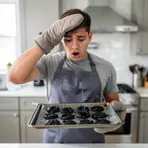
To make a mistake that ruins what you are doing
 295
3.0
295
3.0
To forget something by accident
 38
6.1
38
6.1
Fail to do something you are responsible for
 37
9.9
37
9.9
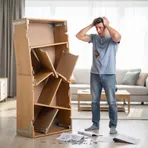
To do something badly and ruin how it turns out
 27
4.9
27
4.9
Make a mistake or cause someone else to make one
 20
3.9
20
3.9
Choosing the wrong direction or decision causes trouble
 17
5.6
17
5.6
To make a silly or careless mistake
 8
6.4
8
6.4
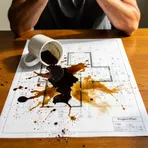
To make a mistake that ruins something because you are careless
 6
7.6
6
7.6
To fail badly and embarrass yourself in front of other people
 3
7.7
3
7.7
To say or do something embarrassing by accident


 1
8.2
1
8.2
To do something foolish or embarrassing by mistake
 1
7.4
1
7.4
To make a small mistake when trying to do something, for example in sport or speech

To make a serious, embarrassing mistake by being careless

To make a silly mistake that makes people laugh at you

To let food fall by accident or make an embarrassing mistake
How Serious

Surface Forms
Morphology
The phrase is fully compositional: 'make' (to cause or perform) combined with 'blunder' (a noticeable careless or embarrassing mistake) yields the straightforward meaning 'to commit a mistake.' The make + noun construction is common and cross-linguistically familiar, so a B1 learner who knows the constituent words would reliably infer the meaning.
Etymology
The phrase make a blunder may come from an old word that meant 'to close the eyes', so imagine someone moving blindly and bumping into things. That picture of acting blindly explains why blunder means 'a serious or embarrassing mistake', so to make a blunder is to make a big, obvious error.