

lubricating oil


 1
3.4
1
3.4
- noun
- /ˈluːbrɪˌkeɪtɪŋ ɔɪl/
- Specialized
- the use of lubricating oil
Examples
-
Just let me know when you need the lubricating oil.
-
Maybe the lock needs lubricating oil or something.
Fiction book (2002) -
- It's just some lubricating oil for the robot.
-
Current systems measure this indirectly by sampling the temperature of lubricating oil.
Academic text (2008) -
In an effort to improve the performance of lubricating oils, the use of small concentrations of additives became more common.
Academic text (1998) -
Available accessories for the turbine include inlet filtration, lubricating oil, hydraulics, cooling water, fuel systems, and a motor starter.
Academic text (1994) -
To keep the engine running smoothly, always check the level of lubricating oil before starting your vehicle.
-
Mechanics recommend using high-quality lubricating oil to minimize wear on engine components.
-
The factory's machines operated quietly thanks to the regular application of lubricating oil to their moving parts.
Synonyms
 ∞
1.0
∞
1.0
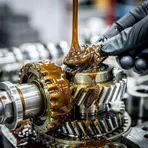
A slippery thick liquid that does not mix with water used for machines, fuel, or cooking
 127
1.8
127
1.8
A thick oily material used to make engine parts move smoothly
 33
3.7
33
3.7
A liquid or grease that reduces wear and noise between moving parts
 11
3.3
11
3.3
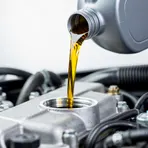
Liquid you put in a car engine to make the moving parts work smoothly
 2
3.4
2
3.4
A clear oily liquid made from oil under the ground used on skin, machines, or to treat constipation

A material like oil or grease that helps machine parts slide easily
How Viscous
127
1.8

- Specialized
1
3.4
Surface Forms
Morphology
The meaning 'a thick, oily liquid used to reduce friction' is directly and transparently derived from combining 'lubricate' (to apply oil or grease to reduce friction) with 'oil' (a slippery liquid). This straightforward noun phrase follows normal English compounding patterns and is cross-linguistically common, so a B1 learner who knows both constituents would readily understand it.
Etymology
Lubricating oil is a simple picture: oil that lubricates, meaning it makes moving parts run smoothly so they do not rub together. Because people long used oils to stop parts from wearing out, the phrase now means a liquid used to 'reduce rubbing' and keep machines working well.