
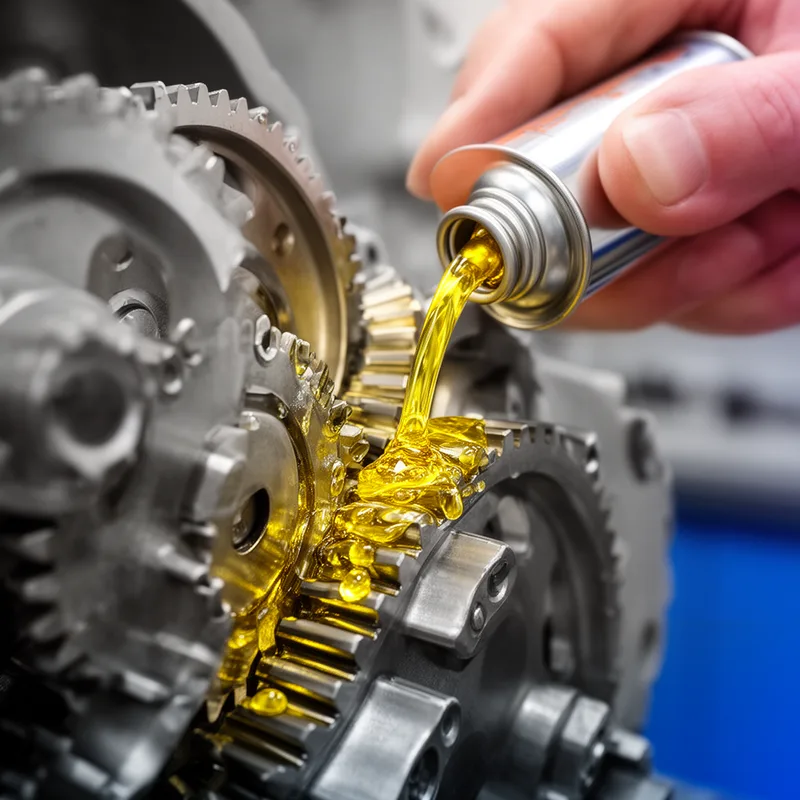
lubricating substance
- noun
- /ˈluːbrɪˌkeɪtɪŋ ˈsʌbstəns/
- Specialized
- Oil is a common lubricating substance used in engines to ensure smooth operation.
Examples
-
Applying a thin layer of lubricating substance can prevent metal parts from wearing out quickly.
-
The use of a synthetic lubricating substance extends the lifespan of machinery.
-
A lubricating substance is essential for machinery.
-
They applied a lubricating substance to the engine.
-
Using a silicone-based lubricating substance can enhance the performance of your bicycle.
-
To keep the door hinges moving smoothly, apply a small amount of lubricating substance.
-
Mechanics often recommend a high-quality lubricating substance for optimal engine efficiency.
Synonyms

 ∞
1.0
∞
1.0

A slippery thick liquid that does not mix with water used for machines, fuel, or cooking
 33
3.7
33
3.7
A liquid or grease that reduces wear and noise between moving parts
 32
5.9
32
5.9
A substance like oil that makes machine parts move smoothly
 11
3.3
11
3.3
Liquid you put in a car engine to make the moving parts work smoothly

 1
3.4
1
3.4
A thick oily liquid that reduces rubbing between moving parts in machines

A liquid or grease that makes parts move more smoothly

A liquid people use to make sex more comfortable
How Slippery

Surface Forms
Morphology
The phrase is compositionally built: 'lubricating' (causing lubrication or reducing friction) modifies 'substance' (material), so the meaning 'a material that reduces friction' is directly derivable from the parts. The participle+noun pattern is a regular, cross-linguistic construction, so a B1 learner who knows both constituents should understand it.
Etymology
Lubricating substance brings to mind putting oil between two metal parts so they slide past each other without rough rubbing. So, a lubricating substance is any material that makes surfaces 'smooth' and stops them from rubbing, helping machines work well.