
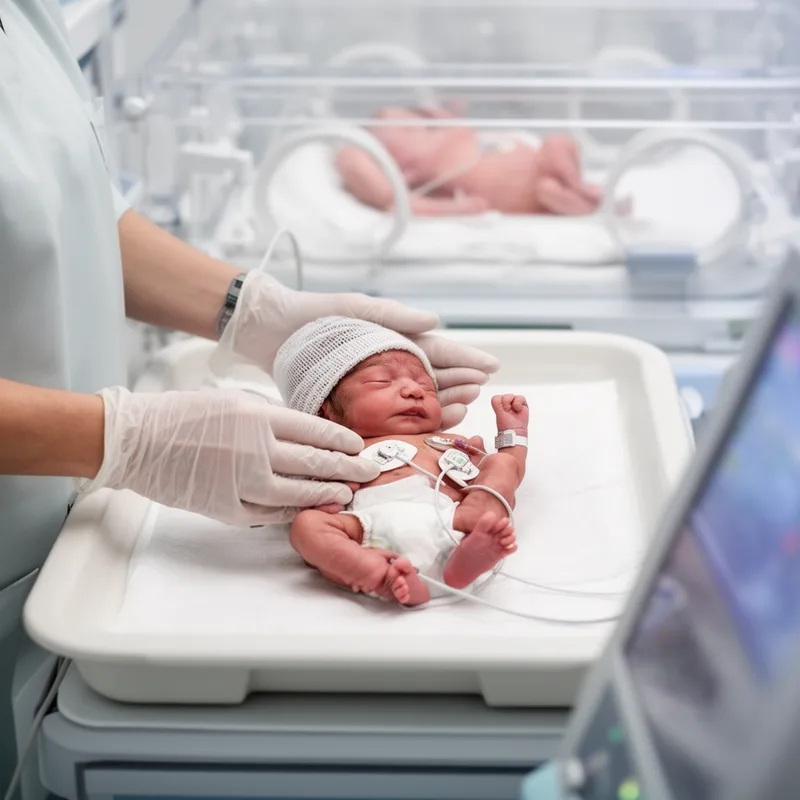
low-birth-weight infant


 1
3.9
1
3.9
- noun
- /loʊ bɜrθ weɪt ˈɪnfənt/
- Specialized
Examples
-
Zahr, L. K. (1993). The confidence of Latina mothers in the care of their low birth weight infants. Research in Nursing & Health, 16, 335-342.
Academic text (2008) -
Many studies show that low-birth-weight infants may face more health challenges than those with normal weight.
-
To improve their chances of survival, it is crucial to provide extra care for low-birth-weight infants immediately after birth.
-
The doctor explained that low-birth-weight infants often require special feeding methods to help them gain weight.
Synonyms
 1
3.9
1
3.9
A baby born weighing less than 5.5 pounds or 2,500 grams

A baby born weighing under 2,500 grams or about 5 pounds 8 ounces
Surface Forms
Morphology
low-birth-weight + infant
The meaning is directly and compositionally built from the constituents: 'low' (small), 'birth' (at delivery), and 'weight' (mass) combined with 'infant' (baby), so a learner knowing those words can infer an infant born with low weight. This is a transparent, cross-linguistically common medical/compositional pattern, though the hyphenated technical term may be more formal than everyday speech.
Etymology
Low-birth-weight infant is a simple, literal name: imagine a newborn placed on a scale at birth showing a very low weight. That's why it refers to a baby 'weighing less than 5.5 pounds' at birth and who often needs special care.