
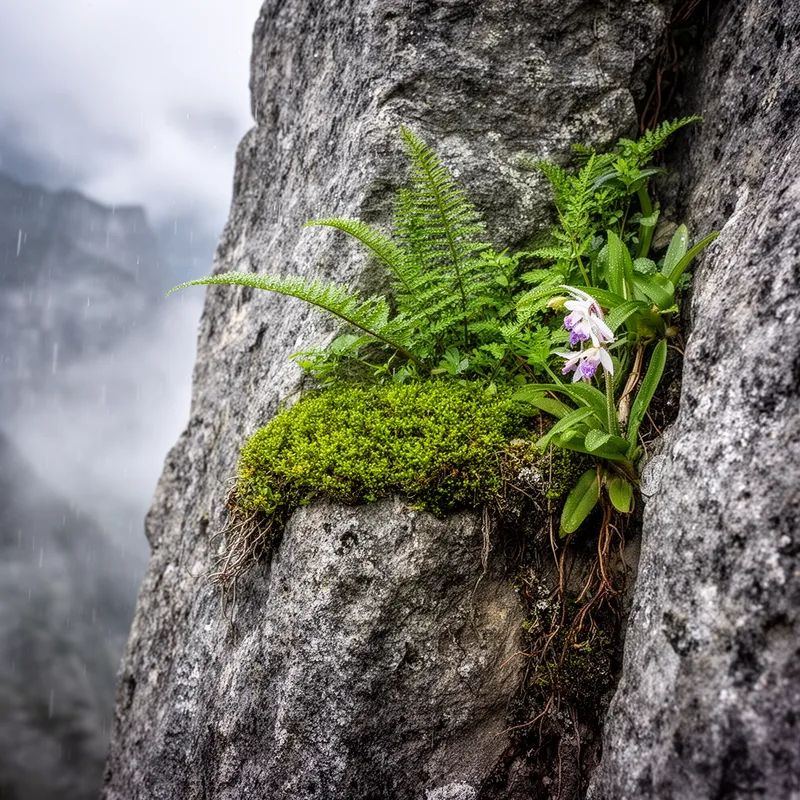
lithophyte
- noun
- /ˈlɪθəˌfaɪt/
- Specialized
- Lichens and mosses often act as pioneering lithophytes in harsh, stone-filled environments.
Examples
-
Some orchids are classified as lithophytes, thriving directly on rocky surfaces.
-
The garden expert explained how certain ferns adapt as lithophytes in mountainous regions.
-
The lithophyte thrives in rocky environments.
-
Many lithophytes can be found in arid regions.
-
Lichens and mosses often act as pioneering lithophytes in harsh, stone-filled environments.
-
Some orchids are classified as lithophytes, thriving directly on rocky surfaces.
-
The garden expert explained how certain ferns adapt as lithophytes in mountainous regions.
Synonyms

A plant that grows on rocks and gets water and nutrients from the air
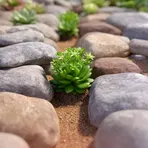
A plant that grows among rocks or in a rock garden
How Soil-Free


Surface Forms
Morphology
lithophyte = litho + phyte
Formed from Greek combining forms 'litho-' (rock) and '-phyte' (plant) which are not standalone English words, so an average B1 learner cannot reliably derive the meaning from familiar English bases.
Etymology
Lithophyte comes from the parts litho- meaning 'stone' and -phyte meaning 'plant', so it literally means a 'stone plant'. These are plants, like mosses or some orchids, that grow on rocks and get their food and water from the air and rain rather than from soil.