
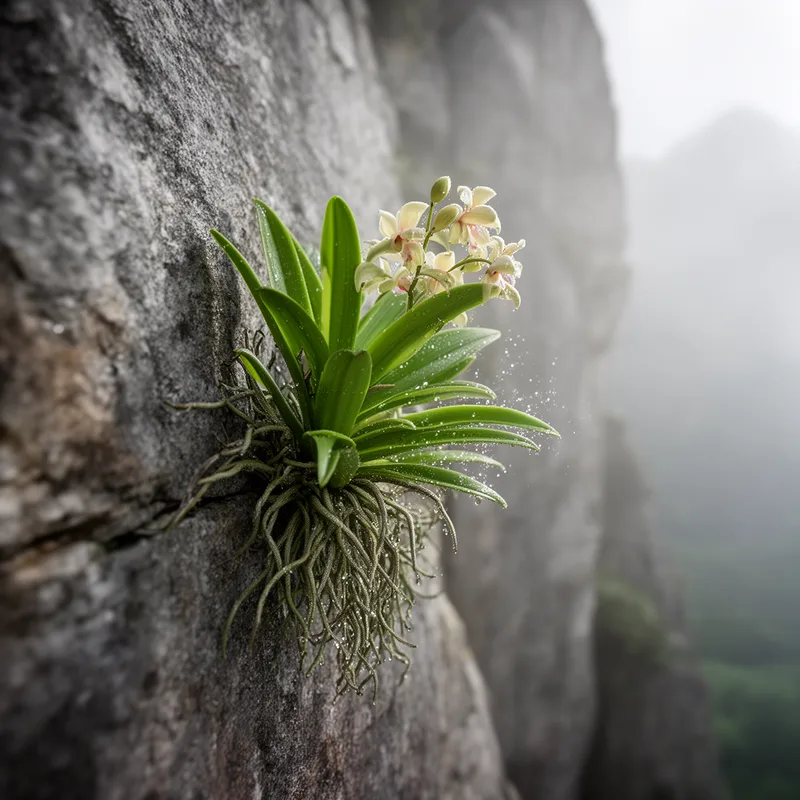
lithophytic plant
- noun
- /ˌlɪθəˈfɪtɪk plænt/
- Specialized
- Certain orchids are lithophytic plants that thrive on rocky cliffs and derive moisture from the air.
Examples
-
Special adaptations allow lithophytic plants to survive where soil is sparse or absent.
-
Botanists study lithophytic plants to understand how life can colonize barren stone surfaces.
-
A lithophytic plant can thrive in harsh environments.
-
Many lithophytic plants are found in arid regions.
-
Certain orchids are lithophytic plants that thrive on rocky cliffs and derive moisture from the air.
-
Botanists study lithophytic plants to understand how life can colonize barren stone surfaces.
-
Special adaptations allow lithophytic plants to survive where soil is sparse or absent.
Synonyms

A plant that grows on rocks and gets nutrients from air and rain

A plant that grows among rocks or in a rock garden
Surface Forms
Morphology
The phrase is fully compositional: 'lithophytic' means 'growing on rocks' and it simply modifies 'plant', so the meaning 'a plant that grows on rocks' follows directly from the constituents. This adjective + noun pattern is a standard and predictable composition, so a learner who knows both words will readily infer the MWE's meaning.
Etymology
Lithophytic plant comes from old Greek parts litho 'stone' and phytic 'plant', so it paints a simple picture of a plant that lives on rocks. These plants cling to stones and take water and food from the air and rain, which is why the name means a plant that grows on rock surfaces.

