
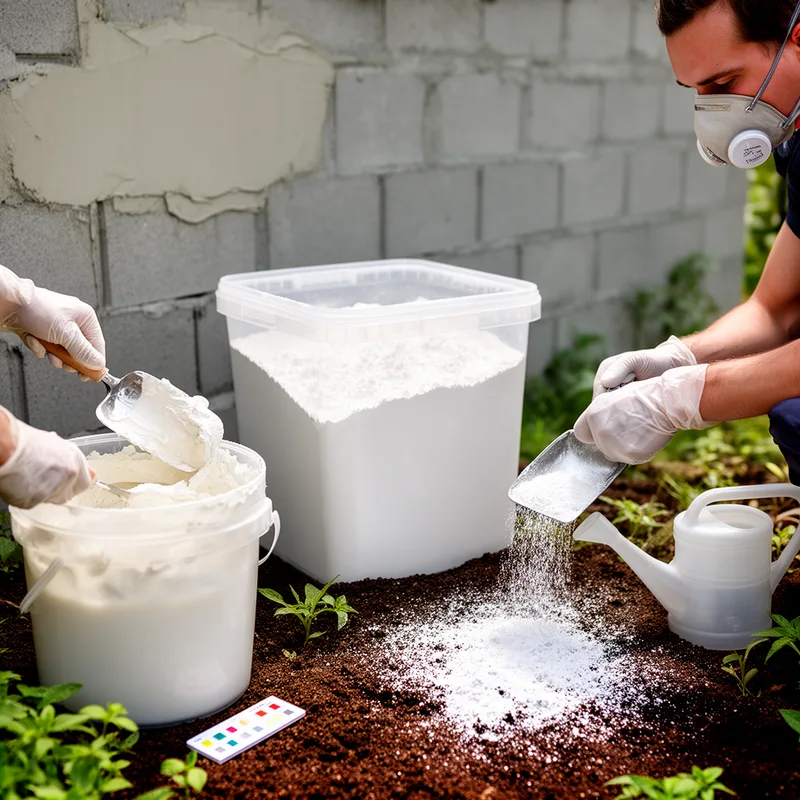
lime hydrate
- noun
- /laɪm haɪˈdreɪt/
- Specialized
- The workers mixed lime hydrate with water to form a paste for the wall plaster.
Examples
-
Exposure to lime hydrate without protective gear can cause serious skin irritation.
-
Lime hydrate is commonly added to mortars to enhance their durability and workability.
-
Lime hydrate is often used to adjust the pH level of soil in agriculture.
-
The construction workers mixed lime hydrate with sand.
-
Many builders prefer using lime hydrates for their projects.
-
In many industrial applications, lime hydrate is a key ingredient for making slaked lime.
-
Farmers apply lime hydrate to improve soil quality and reduce acidity.
Synonyms

A soft white powder made by adding water to quicklime used to make plaster and to reduce soil acidity
A white powder made by adding water to lime and used in mortar and to reduce acid in soil
A white chemical that can burn skin, used in building and farming to make soil less acidic

A white powder used in building, farming, and cleaning water
Surface Forms
Morphology
The meaning is directly compositional: 'lime' (quicklime) plus 'hydrate' (a substance with chemically bound water) yields hydrated lime, i.e. calcium hydroxide. This follows regular chemical naming/compounding patterns and would be understandable to a B1 learner who knows the given constituent senses.
Etymology
Lime hydrate comes from the words lime, meaning the dry mineral, and hydrate, meaning 'with water'. Imagine pouring water on dry lime and watching it turn into a soft, white powder. That's why the name shows it is lime that has had water added and is used as a paste for walls or to treat soil.

