
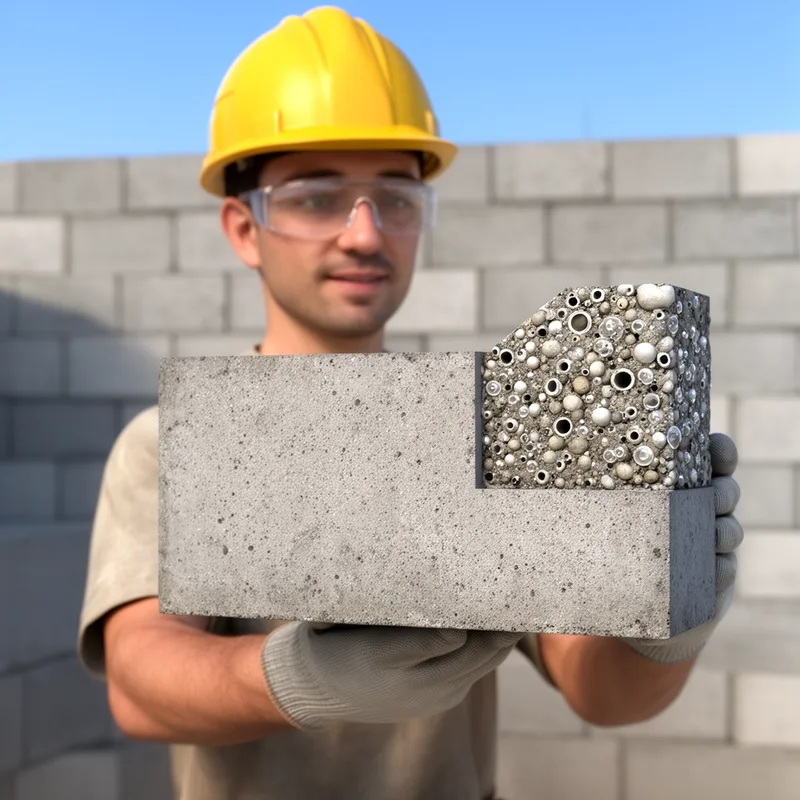
lightweight aerated concrete
- noun
- /ˈlaɪtˌweɪt ˈɛəreɪtɪd kənˈkriːt/
- Specialized
- The new building was constructed using lightweight aerated concrete for improved insulation and reduced weight.
Examples
-
Engineers chose lightweight aerated concrete to minimize the load on the structure's foundation.
-
Because of its thermal properties, lightweight aerated concrete is popular in energy-efficient construction projects.
-
The builder chose lightweight aerated concrete for the new home.
-
Using lightweight aerated concrete can reduce construction costs significantly.
-
Engineers chose lightweight aerated concrete to minimize the load on the structure's foundation.
-
The new building was constructed using lightweight aerated concrete for improved insulation and reduced weight.
-
Because of its thermal properties, lightweight aerated concrete is popular in energy-efficient construction projects.
Synonyms

A type of concrete that has different weight by adding air or light pieces like clay and cork

Lightweight building material with many small air pockets that keep heat in or out

A light type of concrete that has many small air bubbles

A very light building material that has many small air bubbles

A building material made with light pieces like clay or cork to weigh less
How Dense
- Specialized

- Specialized
- Specialized
- Specialized
Surface Forms
Morphology
lightweight + aerated + concrete
The meaning is directly compositional: it denotes a type of concrete that is both lightweight and aerated (i.e., contains air), so a learner who knows 'lightweight', 'aerated', and 'concrete' can infer the overall sense. This adjective + noun construction follows standard, cross-linguistic compounding patterns and is therefore immediately comprehensible rather than idiomatic.
Etymology
Lightweight aerated concrete gets its name from the words lightweight and aerated: lightweight means 'lighter' and aerated means 'filled with air', so the concrete looks like a hard sponge with many tiny air pockets or light bits. Because it is lighter and keeps heat, builders use it to make lighter, warmer buildings.

