

lethargic encephalitis
- noun
- /lɛˈθɑrdʒɪk ɛnˌkɛf əˈlaɪtɪs/
- Archaic
- Symptoms of lethargic encephalitis often included severe lethargy and difficulties controlling eye movement.
Examples
-
During the 1920s, lethargic encephalitis affected thousands, leading to paralysis in eye muscles and extreme fatigue.
-
The mysterious outbreak of lethargic encephalitis in the early twentieth century deeply concerned doctors worldwide.
-
Researchers still investigate the long-term effects of lethargic encephalitis patients from the 1920s.
-
The outbreak of lethargic encephalitis in the early 20th century was devastating.
-
Many people suffered from lethargic encephalitis during the epidemic.
-
Many survivors of lethargic encephalitis still experience muscle weakness long after the epidemic ended.
-
Medical professionals are studying the lingering effects of lethargic encephalitis on cognitive functions in patients.
Synonyms

 16
8.6
16
8.6

A serious illness that makes the brain swell, often from a virus
 3
7.2
3
7.2
A serious brain disease that makes people very weak and keeps some eye muscles from working

A brain disease that caused deep sleepiness and severe muscle weakness during an epidemic in the early 1900s

A serious brain illness that causes sudden deep sleep, muscle weakness, and eye paralysis

An infection of the brain that makes people unable to move their eyes and feel very weak during 1915–1926 outbreaks
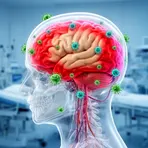
A swelling and irritation of the brain usually caused by a virus
Surface Forms
Morphology
The compound is an adjective + noun where the adjective describes the type of brain inflammation, so a learner who knows 'lethargic' (extremely tired) and 'encephalitis' (brain inflammation) can infer it means an encephalitis characterized by lethargy and related weakness. This follows a standard compositional pattern (type-of-X) and is therefore directly predictable for B1 learners.
Etymology
Lethargic encephalitis comes from the words lethargic and encephalitis, where lethargic means 'very sleepy' and encephalitis means 'swelling in the brain'. The disease made people very sleepy, weak and often unable to move their eyes, so the name describes these main symptoms.