
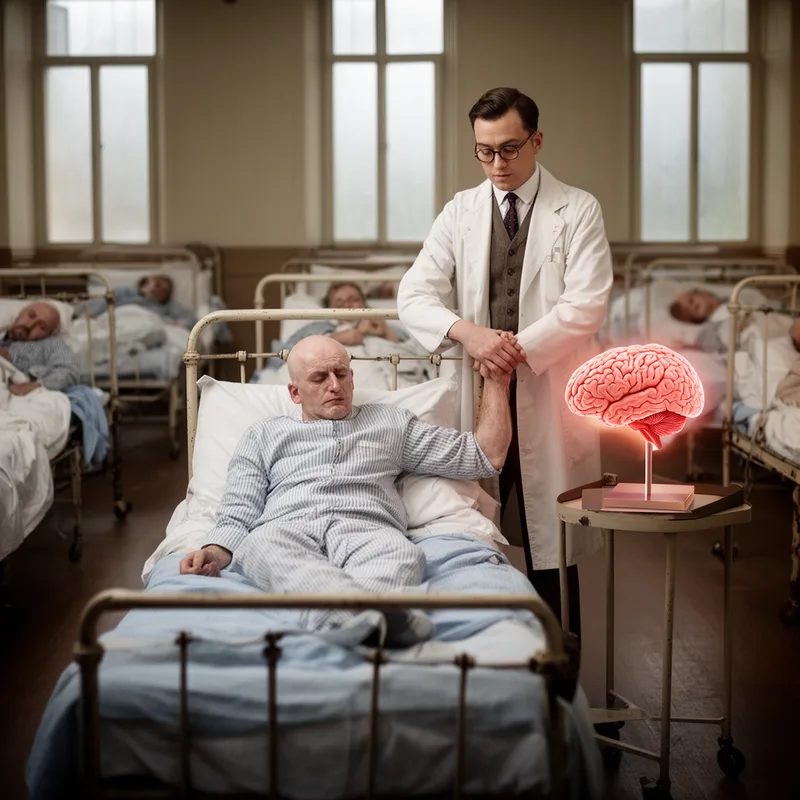
encephalitis lethargica
- noun
- /ˌɛn.səˈfæl.ɪ.tɪs ləˈθɑr.dʒɪ.kə/
- Specialized
- Cases of encephalitis lethargica baffled doctors during the early twentieth century.
Examples
-
Oliver Sacks wrote about survivors of encephalitis lethargica in his book 'Awakenings'.
-
What is encephalitis lethargica?
-
The patients afflicted with encephalitis lethargica experienced profound drowsiness and muscle weakness.
-
The outbreak of encephalitis lethargica was alarming.
-
During the 1917-1926 pandemic, many individuals suffering from encephalitis lethargica experienced severe muscle weakness and paralysis of the eye muscles.
-
The outbreak of encephalitis lethargica was characterized by debilitating symptoms that left patients feeling extremely lethargic.
-
Researchers studied the effects of encephalitis lethargica on patients, noting significant paralysis and weakness among those affected during the epidemic.
Synonyms

 3
7.2
3
7.2

A serious brain disease that makes people very weak and keeps some eye muscles from working

An infection of the brain that makes people unable to move their eyes and feel very weak during 1915–1926 outbreaks

A serious brain illness that causes sudden deep sleep, muscle weakness, and eye paralysis

A brain disease that causes deep sleep, weak muscles, and trouble moving the eyes in the early 1900s
Surface Forms
Morphology
encephalitis + lethargica
The phrase is compositional: 'encephalitis' means brain inflammation and 'lethargica' clearly relates to lethargy/sleepiness (a Latinized form of 'lethargic'), so the disease label literally denotes encephalitis marked by lethargy. Although it is a specialized medical term and the Latin form may be unfamiliar, a learner who knows the constituent meanings can readily infer the MWE's sense.
Etymology
Encephalitis lethargica comes from older words for the 'brain' and for 'sleepiness': encephalitis points to the brain being swollen and lethargica points to the extreme drowsiness patients showed. So the name describes the illness — a brain disease that made people very sleepy and weak.