

lemon zest
 7
3.0
7
3.0

- noun
- /ˈlɛmən zɛst/
- Stir in the lemon zest.
- grated lemon zest
- grate lemon zest
- fresh lemon zest
Loading YouTube…
Watch on YouTubeIt smells like lemons to me, like lemon zest.
- It smells like lemons to me, like lemon zest.
- And then tartar sauce that you made your fancy microplaned lemon zest.
Examples
-
You marinate the lamb in za'atar and lemon zest, right?
-
Whisk together oil, lemon zest and juice, salt, pepper, and chives to create a refreshing salad dressing.
-
Grate the lemon zest off your whole lemon and onto the tuna.
Blog text (32) -
And then we normally just roughly chop some parsley and mix that in with a little bit of lemon zest and lemon juice as well.
-
Thirty minutes before cooking, combine parsley, orange and lemon zest, and garlic.
Blog text (32) -
So in there I've just got herbs, olive oil, lemon juice, lemon zest and lots of salt.
-
Make the Gremolata: In a small bowl, stir the parsley, garlic, and lemon zest until evenly distributed.
Blog text (1) -
Then you add chopped garlic, Rosemary leaves, paprika, turmeric, half of the parsley, some lemon zest, and then the rice itself.
-
In a medium bowl, toss 2 tbsp. of lemon zest with 1 tbsp. sugar to enhance the flavor of your dessert.
-
Combine the strawberries, lemon zest, and lemon juice in a blender to make a delicious fruit smoothie.
Synonyms
 2
2.6
2
2.6
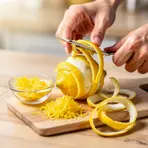
The outer skin of a lemon that you use to add flavor when cooking
 1
1.0
1
1.0
Yellow outer skin of a lemon that you grate or cut for cooking
How Citrusy


Surface Forms
Morphology
The phrase is compositionally built from 'lemon' (a citrus fruit) + 'zest' (the outer skin or the action of removing it), so its meaning — the grated or peeled outer layer of a lemon — is directly predictable from the parts. This is a common, culinary compound found across many languages, so a B1 learner who knows both constituents will readily infer the intended referent.
Etymology
Lemon zest is the thin, bright outer skin of a lemon that cooks grate or peel away. Those tiny pieces hold strong citrus oils, so a little lemon zest gives food a fresh 'flavor' and 'aroma'.