

to leave competitors in the dust
- idiom
- Informal
- With their record-breaking sales, they have left competitors in the dust this year.
Examples
-
By reducing costs and improving service, the company hopes to leave competitors in the dust.
-
The athlete's remarkable performance allowed her to leave competitors in the dust during the final race.
-
The new startup managed to leave competitors in the dust with its innovative platform.
-
We leave competitors in the dust!
-
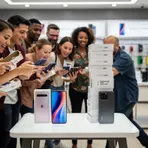
The new smartphone leaves competitors in the dust.
-
With its unique features, the latest software update will surely leave competitors in the dust in the tech market.
-
The innovative marketing strategy helped the brand leave competitors in the dust at the annual sales competition.
Synonyms

 22
3.8
22
3.8

Be better than someone at something
 15
4.8
15
4.8
Do better and get more attention than others
 13
6.0
13
6.0
To go far ahead of someone in speed or success
 8
4.6
8
4.6
To be much better than someone or something
 2
6.1
2
6.1
To do better than someone or something and win

To beat others easily by being much faster or better

Get an advantage over other companies or people

To win against other teams or companies in a contest

To suddenly move ahead of competitors by making a big improvement
Antonyms


How Dominant
71
7.5
 386
4.7
386
4.7
- Informal
48
3.7
∞
1.4
30
4.8
310
3.8
Surface Forms
Morphology
leave + competitor + in + the + dust
The sense 'to greatly surpass or leave far behind' is directly derivable from combining 'leave' (to leave behind) with the image 'in the dust' (trailing behind in a dusty wake). The spatial/metaphorical logic of being left in dust is common across languages and follows a transparent compositional pattern, so a B1 learner who knows the constituent words will very likely infer the meaning.
Etymology
The idiom leave competitors in the dust comes from the image of a very fast car or horse throwing up a cloud of dust while the others are left far behind. That's why it means 'to get far ahead of rivals'.