

lead plant
- noun
- /lɛd plænt/
- US
- Some early settlers believed the presence of lead plant signaled nearby mineral deposits.
Examples
-
The lead plant thrives in sandy soils.
-
We saw a cluster of lead plants blooming in the prairie during our hike.
-
The lead plant is commonly found in the sandy soils along riverbanks in the Midwest.
-
Many gardeners appreciate the lead plant for its unique foliage.
-
The lead plant is often found thriving near stream banks, indicating mineral resources in the soil.
-
Botanists study the lead plant because it grows well in sandy woodlands of the western United States.
-
During our nature walk, we noticed that the lead plant was abundant in the sandy area, suggesting nearby lead ore.
Synonyms
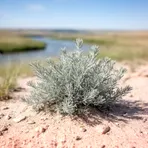
A low bush with grey divided leaves that grows in sandy soils
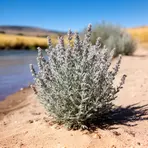
A small shrub with gray leaves and small dull flowers that grows on sandy banks in western United States
Surface Forms
Morphology
The compound is compositionally built from 'lead' (the metal) + 'plant' so a learner can infer it is a plant related to lead, but the precise sense — a shrub that indicates the presence of lead ore — requires domain knowledge and is not fully predictable from the constituents alone. Noun+noun compounding allows many relations (contains, grows on, indicates, made of), so the specific ‘indicator of lead ore’ reading is only partially transparent to a B1 learner.
Etymology
Lead plant comes from an old belief that this shrub grew where there was lead in the ground. The parts lead and plant make a simple picture: people used the plant as a sign to find nearby 'lead', so lead plant means the shrub thought to point to lead ore.

