

lapidarian
- adjective
- /ˌlæpɪˈdɛəriən/
- Specialized
- The ancient temple's walls bore a lapidarian inscription honoring the gods.
Examples
-
Scholars studied the lapidarian records to reconstruct the city's lost history.
-
The lapidarian texts were difficult to translate.
-
Only a few surviving documents from that era exist, most of them lapidarian in nature.
-
This is a lapidarian inscription.
-
The ancient temple's walls bore a lapidarian inscription honoring the gods.
-
Only a few surviving documents from that era exist, most of them lapidarian in nature.
-
Scholars studied the lapidarian records to reconstruct the city's lost history.
Synonyms
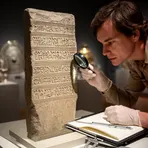


 1
9.5
1
9.5
About the study of writing carved on stone or metal, often on monuments

Relating to writing carved on stone, for example on a monument or building

About words carved or written on a hard surface
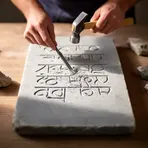
Written or carved on a surface like a stone
Surface Forms
Morphology
Etymology
The word lapidarian comes from the Latin root lapis meaning 'stone' and shares that root with lapidary, a word for working with or cutting stones. So lapidarian describes writing or records that are literally 'on stone'.