
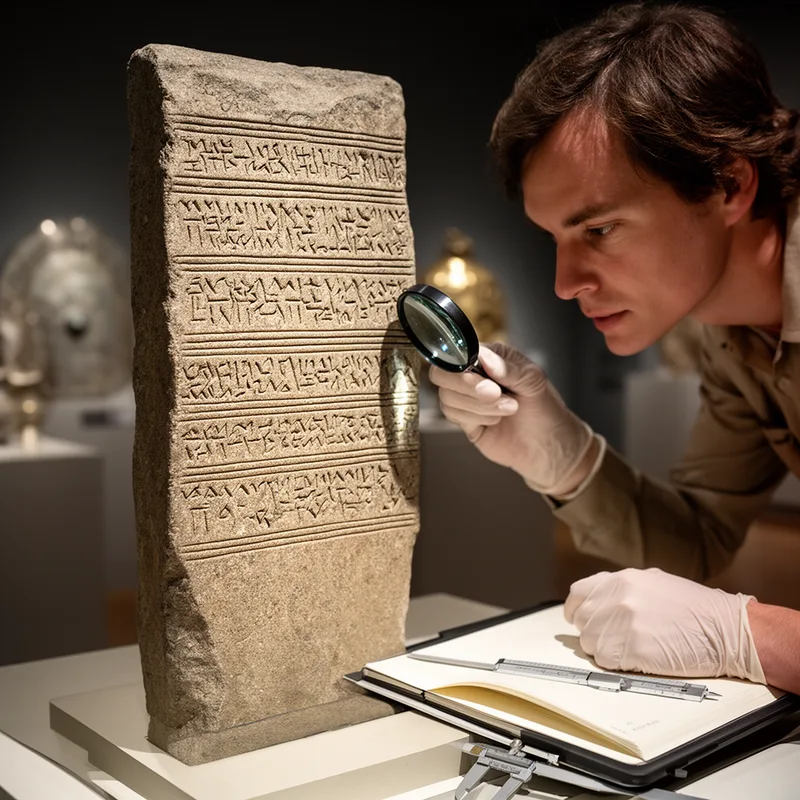
epigraphic


 1
9.5
1
9.5
- adjective
- /ˌɛpɪˈɡræfɪk/
- Specialized
- Yet an analysis of inscriptional style yields a close connection with Islamic epigraphic models of the late tenth to the eleventh century, arguing for reconsideration of the mid-tenth-century date commonly ascribed to the bowl.
Examples
-
Epigraphic evidence further reveals significant changes in the perception of synagogue space from the first century to the seventh century.
Academic text (1992) -
Much of the evidence brought forward is epigraphic in nature; it depends almost entirely on inscribed texts.
Blog text (11) -
I have not found any other epigraphic examples of the text, and truly unique inscriptions are rare in the Middle Ages.
Academic text (2005) -
They prominently feature Islamicate epigraphic and ornamental decorations.
Academic text (2009) -
For 20 years, the Epigraphic Survey of the Oriental Institute at the University of Chicago has worked in Luxor Temple, copying and publishing its inscribed walls.
Academic text (2010) -
Hard evidence—epigraphic or numismatic, archaeological or architectural, anatomic or genetic—is completely absent.
Academic text (2014) -
Based on these results and a combination of epigraphic and historical considerations, the commission concluded in a packed press conference in Jerusalem on June 18 that both inscriptions were modern fakes, engraved on authentic artifacts and covered with a carefully prepared mixture to imitate patina and to make them look centuries old.
Academic text (2003) -
The historian carefully analyzed the epigraphic inscriptions found on the ancient monument.
-
Many epigraphic studies involve deciphering the carvings left by past civilizations on their buildings.
-
Inscriptions in Greek and Latin are crucial for epigraphic research in archaeology.
Synonyms
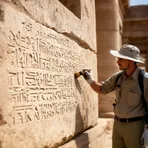
Relating to writing carved on stone, for example on a monument or building
Relating to writing cut into stone, often on monuments or walls
About words carved or written on a hard surface
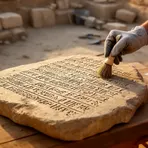
Having words written or carved on a surface
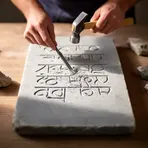
Written or carved on a surface like a stone

Cut into a surface to form a design or letters
Surface Forms
Morphology
Etymology
The word epigraphic comes from Greek parts epi- ('on') and graph from graphein ('to write'), and you can see the same graph in words like autograph and photograph. So, epigraphic means writing 'on' a surface, which is why it describes inscriptions carved on monuments or buildings.