
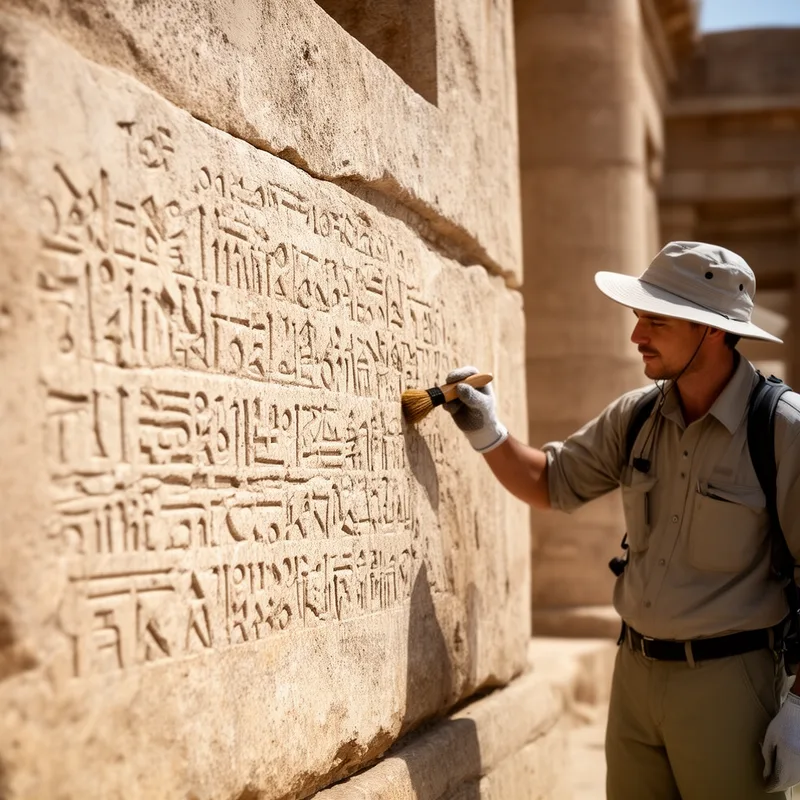
epigraphical
- adjective
- /ˌɛpɪˈɡræfɪkəl/
- Specialized
- Aside from a few careful epigraphical studies of monument inscriptions, the grave sites, the hill, and its history had passed largely ignored, chronicled only in fragments until 1984.
Examples
-
Hanson's vivid style and meticulous combing of the ancient literary, archaeological, and epigraphical sources have produced a near masterpiece of historical imagination and reconstruction...
Blog text (1) -
A tenth-century date is further supported by epigraphical analysis.
Academic text (1997) -
The museum's epigraphical collection includes ancient inscriptions from various civilizations.
-
Researchers studied the epigraphical evidence found on the tombstones to learn about past cultures.
-
Her dissertation focused on the epigraphical aspects of Roman architecture and its historical significance.
Synonyms


 1
9.5
1
9.5
About the study of writing carved on stone or metal, often on monuments
About words carved or written on a hard surface
Having words written or carved on a surface
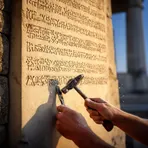
Relating to writing cut into stone, often on monuments or walls
Surface Forms
Morphology
epigraphical = epigraphic (transparent) = epigraph + ic + al
The final formation is the regular addition of '-al' to 'epigraphic', yielding an adjective meaning 'relating to inscriptions'.
Etymology
Epigraphical comes from the Greek parts epi- 'on' and graph 'to write', just like in paragraph. This gives the image of writing put 'on' a surface, which is why epigraphical also describes inscriptions carved 'on' stone, buildings, or monuments.