

kino gum
- noun
- /ˈkiːnoʊ ɡʌm/
- Specialized
 :
goma kino
:
goma kino
- Tanners sometimes use kino gum to treat leather.
Examples
-
Traditional medicine utilized kino gum to heal wounds and stop bleeding.
-
The bark produces kino gum, which is valued for its astringent properties.
-
The kino gum is harvested from tropical trees.
-
Many artisans use kino gum in their leatherwork.
-
Tanners sometimes use kino gum to treat leather.
-
The bark of certain trees produces kino gum, which is used in tanning.
-
In traditional medicine, kino gum is applied to wounds to promote healing.
Synonyms

A reddish gum from tropical trees used to treat diarrhea and tan leather

A reddish sticky substance from tropical trees used to make leather and as a medicine

A reddish-brown dried gum from eucalyptus trees used for tanning and medicine
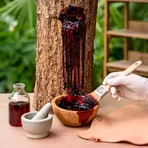
A reddish or black sticky substance from some tropical trees used to make medicine and treat leather

A reddish or black sticky juice from some trees used in medicine and tanning

A reddish dried juice from the dhak tree used to make skin and leather feel tight

A reddish dried juice from the dhak tree used to dye cloth and to help heal wounds
Surface Forms
Morphology
The phrase is compositionally transparent: 'kino' (a sticky red resin) names the specific substance and 'gum' denotes the general class of resinous adhesive, so a learner who knows both words can infer it is the resinous gum from kino trees. The noun+noun type→class pattern is a common, cross-linguistic naming strategy, making the meaning predictable to a B1 learner who knows the constituents.
Etymology
Kino gum may come from an old word where kino meant the red, sticky sap and gum meant the sticky substance that comes from tree bark. People used this dark, red 'gum' to treat leather and to help wounds 'stop bleeding', so the name links the sticky sap to those uses.

