

kinesthesis
- noun
- /ˌkɪnəsˈθiːsɪs/
- Specialized
- She used her kinesthesis to navigate the obstacle course, feeling the placement of her feet as she moved.
Examples
-
At the time, she had been too distracted to consciously memorize the route, so she had to think a moment, recalling the turns and cross-corridors by kinesthesis rather than by visual clues.
Fiction book (1992) -
A second method of emphasizing kinesthesis in motor learning has been a manual manipulation technique in which learners relax as they are guided through the movement.
Academic text (2000) -
Laban's work starts from a profound understanding of kinesthesis, the basis of what Gardner calls bodily-kinesthetic intelligence.
Academic text (1993) -
The interviews with the stimulus group participants revealed that none of them imagined or experienced the kinesthesis associated with performing the task, but instead 'pictured themselves' performing the task.
Academic text (2001) -
EMG - the electromyograph provides a continuous record of the intrinsic electrical activity associated with muscle contraction and kinesthesis.
Academic text (1995) -
He sees kinesthesis as being at the heart of the matter: "Someone once said that in addition to the traditional five senses, we should add a sixth sense that 'tells' the left arm and hand when playing the cello where to go" (p. 204).
Academic text (1993) -
To investigate the effect of mental practice (MP) on reaction time (RT), an experiment was conducted using a total of 100 sports participants matched on age, imagery ability, intelligence, kinesthesis, motivation, sex, skill level, and speed of reaction.
Academic text (1992) -
If we assume a correlation between physical development and intellectual, psychic, and creative development in early learning, we can begin to clarify how kinesthesis functions and describe how kinesthetic intelligence underlies or is directly connected to the development of other intelligences.
Academic text (1993) -
During the dance class, the instructor encouraged the students to rely on their kinesthesis to find the rhythm of the movements.
-
Athletes often train their kinesthesis to enhance their performance by improving their awareness of body position and movement.
Synonyms


 1
9.8
1
9.8
The sense that tells you where your body parts are, how they move, and how tight they are
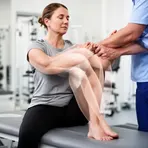 1
6.0
1
6.0
The feeling of where and how your arms or legs move
 1
9.9
1
9.9
The sense that tells you where your body parts are and how they move

Awareness of how your body parts move and where they are

To feel and know where your body, arms, and legs are and how they move

Ability to feel where your body parts are and how they move without looking
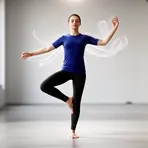
A sense of where your arms and legs are and how they change position
How Sensitive
- Specialized

- Specialized
Surface Forms
Morphology
kinesthesis = kinesthesia (opaque) = kines + esthesia
Formed from Greek combining forms (kines- 'movement' + -esthesia 'sensation') that are technical and not productive in everyday English, so learners cannot reliably derive the meaning from common English vocabulary.
Etymology
The word kinesthesis comes from Greek parts kine- meaning 'movement' and -esthesia meaning 'feeling' or 'sensation', so it literally means the 'feeling of movement'. Think of kinetic (movement) and anesthesia ('without feeling') to remember that kinesthesis is the body's sense of where and how its parts move.