
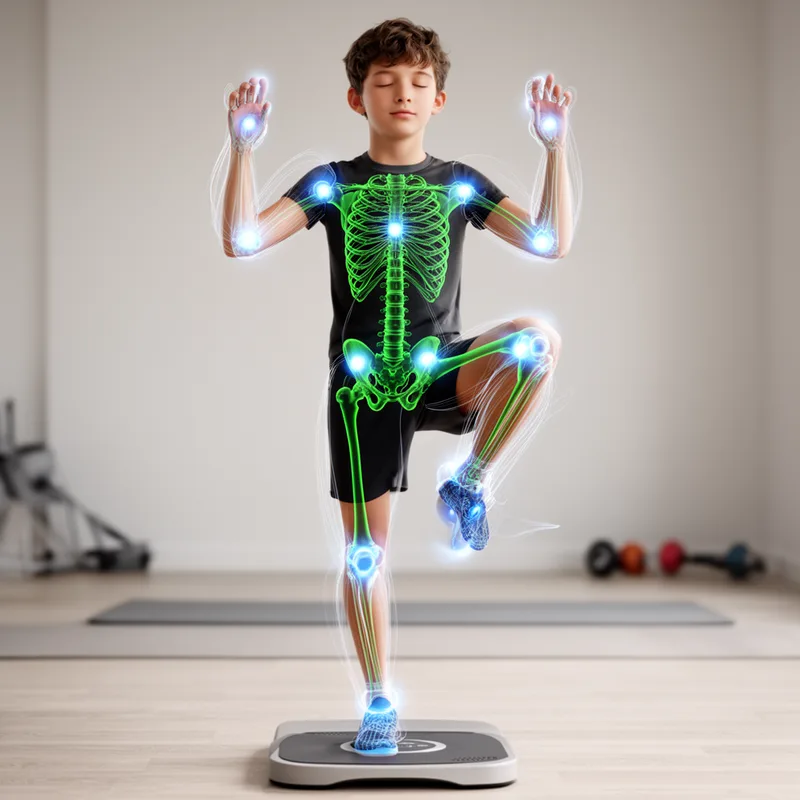
kinesthesia


 1
9.8
1
9.8
- noun
- /ˌkɪnɪˈsθiːziə/
- Specialized
- While European and American philosophers have long been concerned with the visual perception of movement, they have largely ignored awareness of movement sensation, or kinesthesia, as an epistemological mode.
- the sense of kinesthesia
Examples
-
The dancer relies on kinesthesia to accurately gauge her body's movements during the performance.
-
Kinesthesia is similar, but refers more to the sense of motion in the physical body.
Academic text (2012) -
I considered the role of kinesthesia in acquiring motor movement; teach the arms what to do, and the action should feel sound.
Academic text (2000) -
Following this, the sense of kinesthesia will be discussed in relation to Dalcroze's approach.
Academic text (2012) -
Galvao concludes by noting the lack of empirical research into kinesthesia, especially in relation to music education.
Academic text (2012) -
Galvao describes kinesthesia and relates this mode of sensory input to music education.
Academic text (2012) -
Omitted from the sensorium, kinesthesia is nonetheless a primary means by which we know, engage with, and make sense of the world.
Academic text (2009) -
The empirical research on kinesthesia in education and on the Dalcroze approach to music education is only starting to explore the many facets of this way of teaching, but the existing research is encouraging.
Academic text (2012) -
The relationship of proprioception and kinesthesia is not yet settled in the scientific community, and the two terms are often used interchangeably (Galvao, 1999).
Academic text (2012) -
Despite the lack of empirical evidence, many prominent minds in music education—such as Dalcroze and Carl Orff—have seen the importance of training in kinesthesia for music education.
Academic text (2012)
Synonyms
 1
9.9
1
9.9
The sense that tells you where your body parts are and how they move
 1
6.0
1
6.0
The feeling of where and how your arms or legs move

Awareness of how your body parts move and where they are
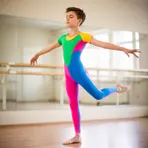
To feel where your body parts are and how they move

To feel and know where your body, arms, and legs are and how they move

A sense of where your arms and legs are and how they change position

Ability to feel where your body parts are and how they move without looking
Antonyms

How Sensitive
- Specialized
1
9.8

- Specialized
Surface Forms
Morphology
Etymology
Kinesthesia comes from the Greek words kinesis ('movement') and aisthesis ('sensation'). So it is the body's 'movement sense' that lets you feel the position, movement, and tension of your muscles and joints.